



The Ministry of Ecology and Natural Resources of the Republic of Kazakhstan has announced a key decision of the 20th Conference of the Parties to the CITES Convention, held in Samarkand from 24 November to 5 December 2025: the zero export quota on saiga horns originating exclusively from the Kazakhstani population has been lifted. The decision was made following extensive consultations and discussions both at the Conference and in preparation for its work.
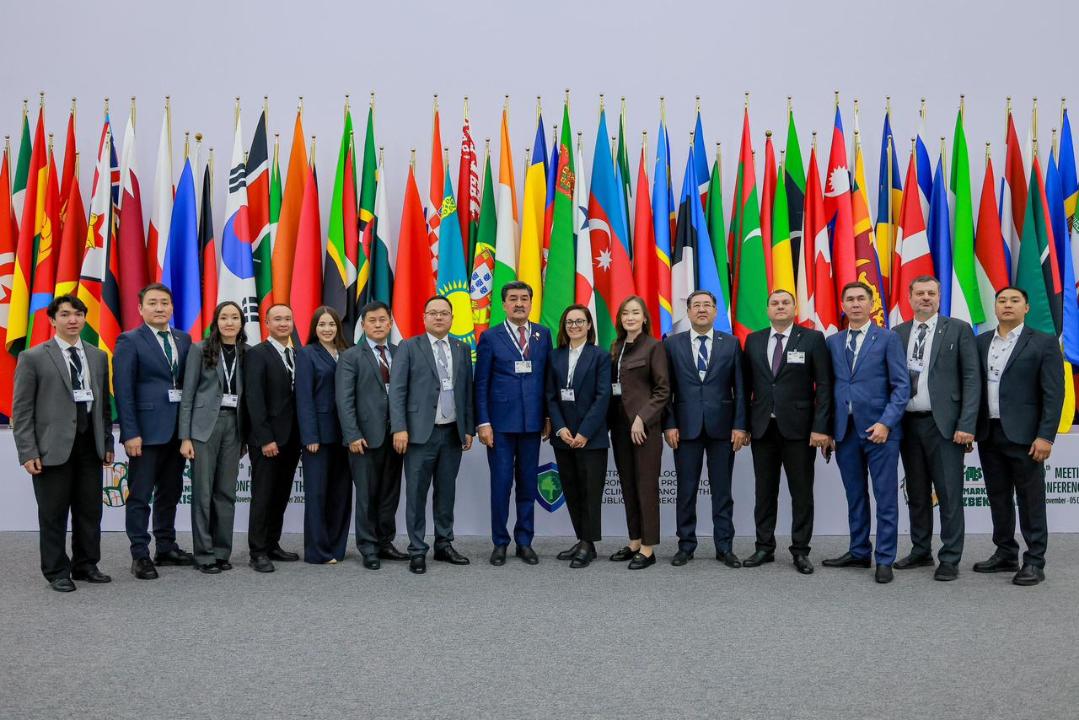
To promote the national position, an expanded delegation was formed under the leadership of Minister Yerlan Nysanbayev. It included the administrative and scientific CITES authorities, as well as sectoral organizations and experts responsible for developing traceability and marking mechanisms: the Committee of Forestry and Wildlife, RSE “Institute of Zoology” of the MNHE RK, RSE “Okhotzooprom”, the Association for the Conservation of Biodiversity of Kazakhstan (ACBK), along with specialists from Tabiǵi Orta and JSC “Kazakhtelecom” overseeing the national digital marking and tracking system.
At the official closing ceremony on 5 December, CITES Secretary-General Ivonne Higuero highlighted Kazakhstan’s achievements in saiga conservation: numbers have risen from a historic low of around 21 thousand to over 4 million individuals. According to her, these successes created the conditions for resuming international trade in derivatives under a strictly controlled approach.
The voting results for Kazakhstan’s proposal: 111 countries (94%) supported it, 7 voted against. Kazakhstan confirmed that any operations with derivatives would be carried out only with an effective control and traceability system in place, and revenues from regulated trade would be directed to biodiversity conservation, monitoring and ecosystem restoration. Thus, lifting the zero quota is viewed as a transition to a scientifically justified model of sustainable use, in which the legally controlled trade does not harm the population or its habitat.
An important component of Kazakhstan’s position is the alignment of saiga population management measures with the goals of the Kunming–Montreal Global Biodiversity Framework (GBF): preserving ecosystem integrity, restoring degraded lands and pastures, and ensuring sustainable use of wildlife resources while reducing pressure on vulnerable steppe and desert ecosystems.
The Conference was attended by Vitaliy Viktorovich Gromov, Adviser to the Director General of the Institute of Zoology of the Republic of Kazakhstan.
05.12.2025
Source: https://www.gov.kz/memleket/entities/ecogeo/press/news/details/1120388