



On November 3, the photo exhibition “Dala qyrany izimen” (“In the Footsteps of the Steppe Eagle”) opened at Dostyk Plaza shopping mall in Almaty. The exhibition presents the results of a joint project by Toyota Kazakhstan, National Geographic Qazaqstan and the Institute of Zoology to study and conserve the steppe eagle (Aquila nipalensis), a rare bird of prey listed in the Red Data Book of Kazakhstan.
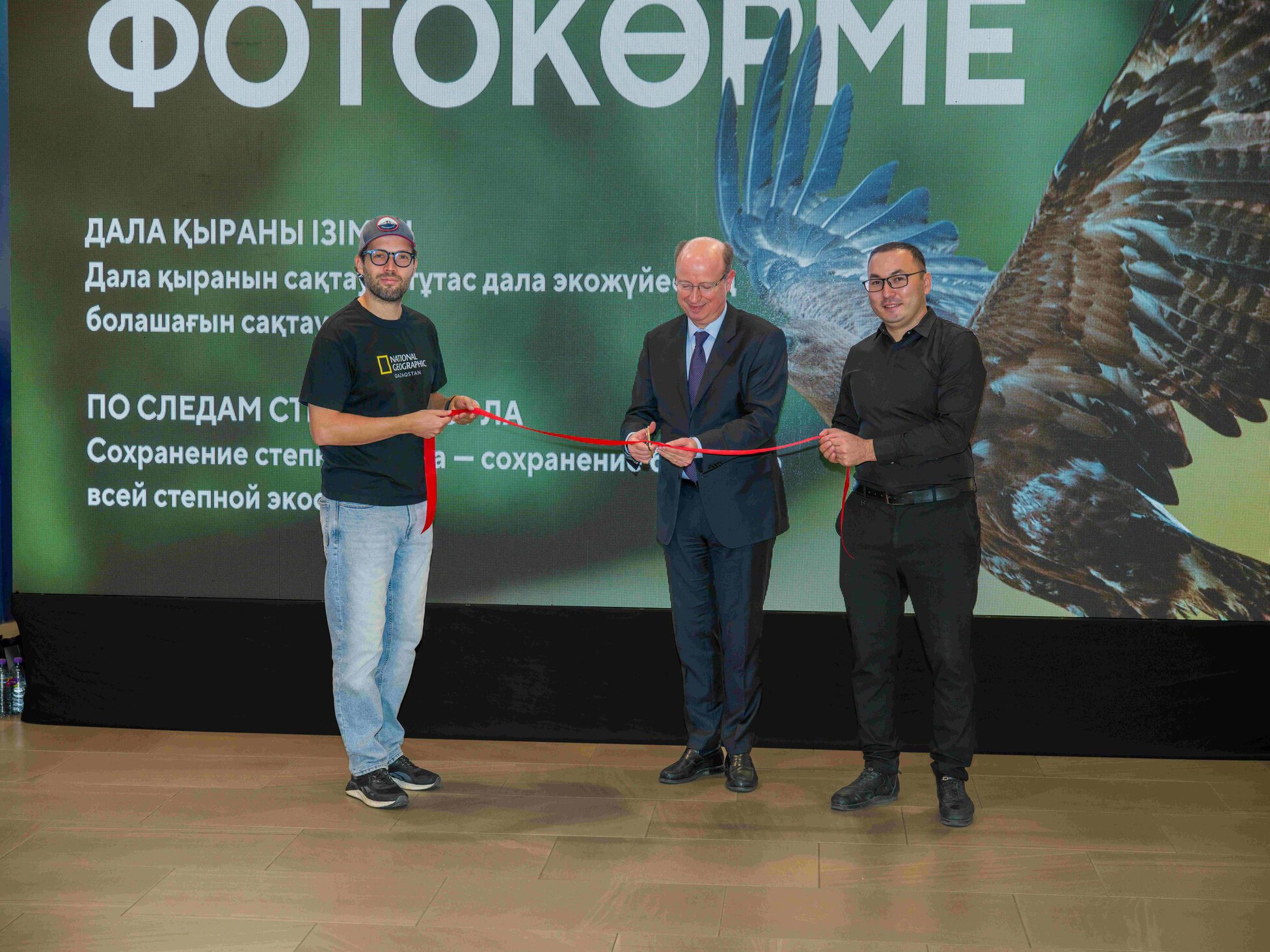
Bekzhan Talgatovich Berdikulov, Head of the Laboratory of Ornithology and Herpetology of the Institute of Zoology and a direct participant in the project’s scientific research, took part in the opening of the exhibition.
Scientific research – the foundation of species conservation
Kazakhstan plays an important role in the conservation of the steppe eagle: approximately 75% of the species’ global breeding population occurs within the country. Therefore, studying its distribution, nesting ecology and migration is particularly important for developing effective conservation measures.
As part of the project, specialists from the Institute of Zoology conducted field research in five regions of Kazakhstan: East Kazakhstan, Akmola and Pavlodar regions, as well as the Zhetysu and Abai regions. The scientific work included surveys of habitats and nesting areas, bird observations, nest searches, ringing, and the installation of GPS transmitters.
During the project, researchers discovered 24 steppe eagle nests, ringed 12 birds and equipped six individuals with GPS transmitters. The data obtained will make it possible not only to track the birds’ movements, but also to study seasonal migrations, identify wintering grounds and clarify breeding areas.
Data obtained through satellite monitoring are particularly valuable. They help identify areas that are most important for the conservation of the species, reveal potential threats along migration routes, and take the birds’ needs into account when planning economic activities.
As Bekzhan Berdikulov noted, studying migration routes makes it possible to identify areas where steppe eagles most frequently encounter hazards, including power lines. In addition, information on wintering grounds is of international importance: because the steppe eagle migrates across several countries, the data obtained can be used to coordinate conservation measures with organizations in Africa and South Asia.
From scientific results – to public awareness
One of the important objectives of the project was not only to conduct research, but also to raise public awareness of the steppe eagle, its biology and the threats facing the species.
The main risk factors for the steppe eagle include collisions and electrocution associated with power lines, steppe fires, nest destruction and poisoning. Conservation of the species requires not only scientific knowledge and targeted conservation measures, but also public understanding of the value of wildlife and the need to protect it.
This is why documenting the expeditions and scientific work became an important part of the project. The expeditions were photographed by Dmitry Dotsenko, Artem Orlyansky, Farkhat Kabdykairov, Kairat Shozhebayev, Ilya Davydovich and Timur Baigulov, as well as several popular bloggers who accompanied the researchers during field trips, learned about the work of ornithologists, and photographed steppe eagles in their natural habitat.
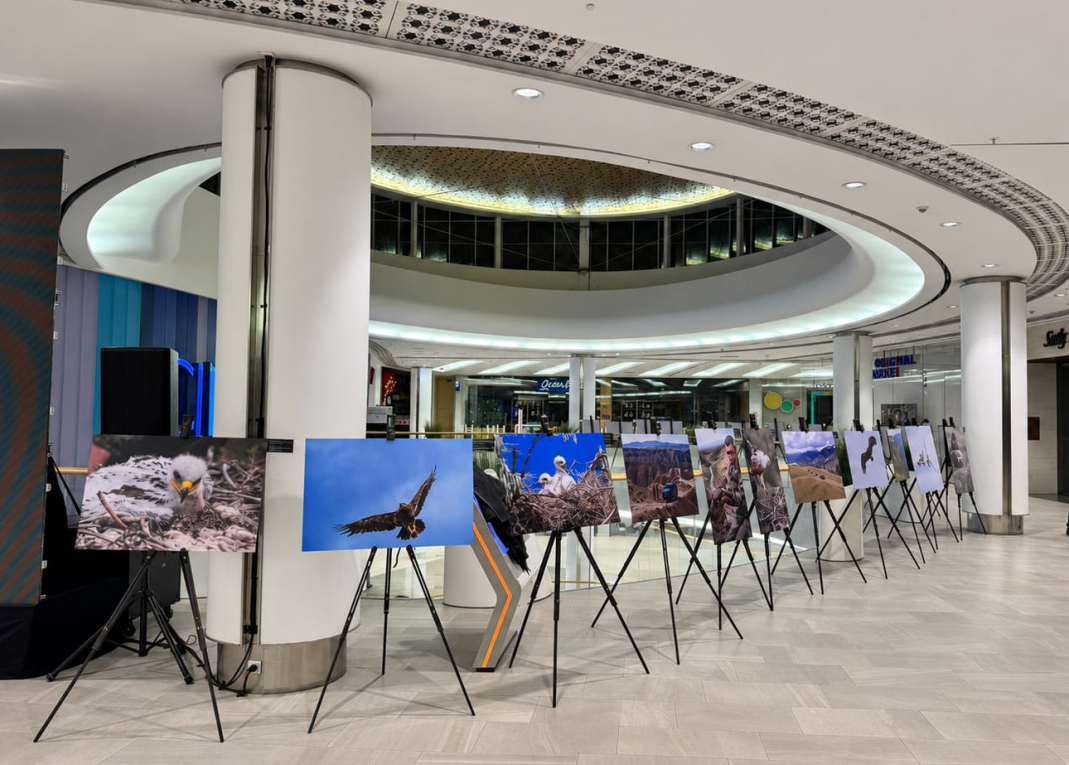
The exhibition features 25 photographs selected from more than 2,000 images taken by project participants in 2026. Visitors can see not only the birds themselves and Kazakhstan’s natural landscapes, but also field research conducted during the expeditions. A short documentary film about the project is also presented to visitors.
This format makes the results of scientific research accessible to a broad audience, draws attention to biodiversity conservation issues, and demonstrates the importance of the work carried out by specialists studying wildlife.
Cooperation for biodiversity conservation
The “In the Footsteps of the Steppe Eagle” project has become an example of effective cooperation between science, business and popular science media. Toyota Kazakhstan provided financial support for the research and vehicles for the expeditions, National Geographic Qazaqstan provided media coverage and documentation of the project, while the Institute of Zoology of the Republic of Kazakhstan served as the scientific partner and conducted the research.
At the opening of the exhibition, National Geographic Qazaqstan representative Nursultan Saduakasov emphasized the importance of improving public environmental awareness and drawing attention to nature conservation.
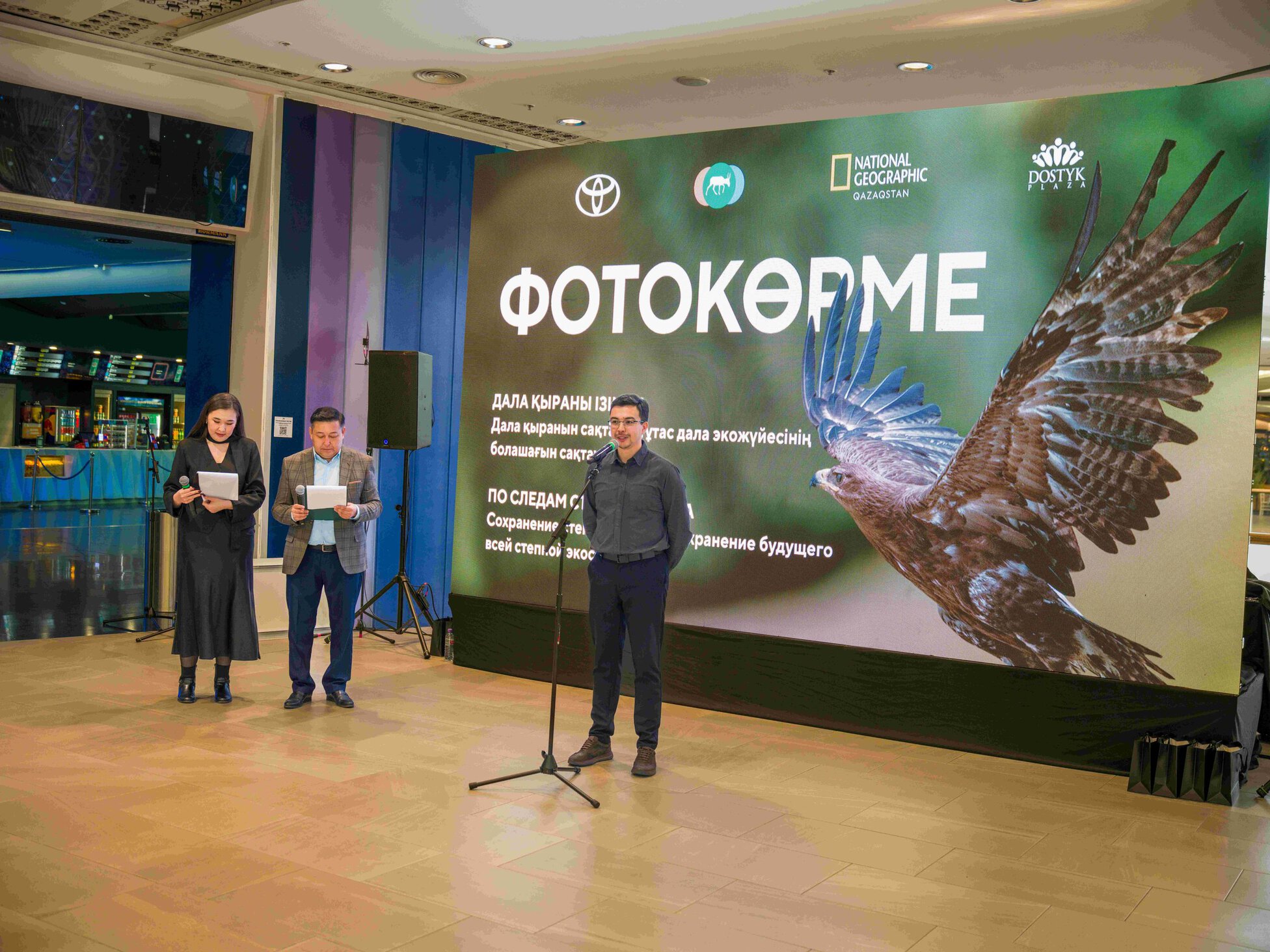
For the Institute of Zoology, participation in such initiatives provides an opportunity not only to expand scientific knowledge of rare and vulnerable animal species, but also to contribute to their practical conservation. The results obtained provide a scientific basis for conservation decisions, while presenting research activities to the public helps strengthen the connection between science and society.
Conserving the steppe eagle is not only about protecting a single rare bird species. It is also an important part of conserving Kazakhstan’s steppe ecosystems and natural heritage.
The “In the Footsteps of the Steppe Eagle” photo exhibition will remain open at Dostyk Plaza shopping mall in Almaty until November 23, 2026.
05.11.2026
Photos: Farkhat Kabdykairov and Artem Orlyansky