



Employees of the Institute of Zoology of the Science Committee of the Ministry of Science and Higher Education of the Republic of Kazakhstan took part in the “International Training Course on Aquatic Biological Identification and eDNA Data Analysis”, held in Wuhan (China) from 16 to 29 November 2025. The course was hosted by the Institute of Hydrobiology of the Chinese Academy of Sciences (CAS), one of the world’s leading centres for freshwater ecosystem research.
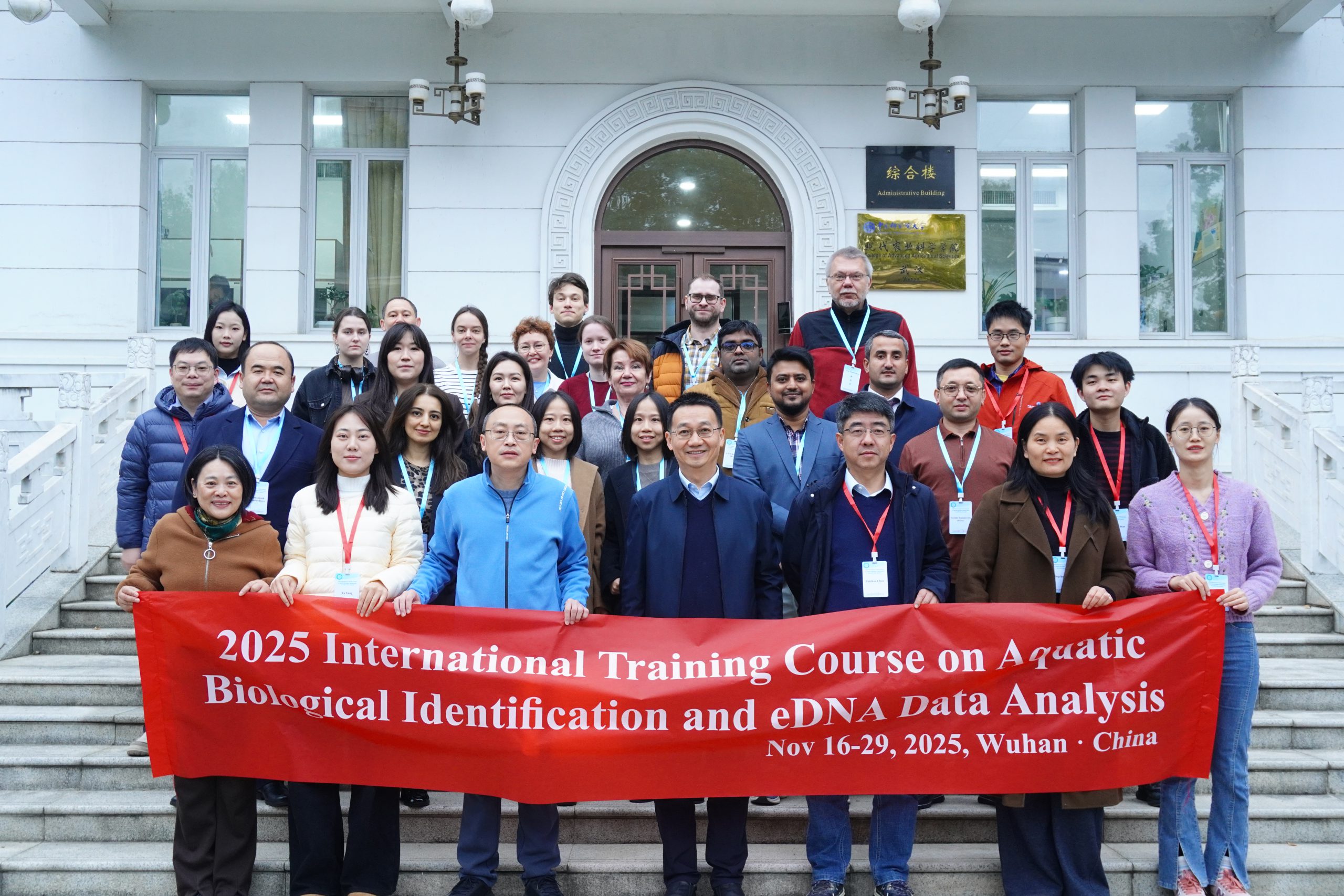
A total of 19 scientists from 7 countries took part in the international training: Kazakhstan, Russia, Uzbekistan, Tajikistan, Azerbaijan, Malaysia and Bangladesh.
Kazakhstan was represented by specialists from the Laboratory of Hydrobiology and Ecotoxicology of the Institute of Zoology: Doctor of Biological Sciences, Professor E.G. Krupa, researcher E.M. Argynbaeva and junior researcher A.N. Kenzheeva.
The training focused on modern approaches to aquatic organism identification and the use of environmental DNA (eDNA), an innovative technology that allows the detection of biodiversity in water bodies without directly collecting organisms and is now considered one of the most promising tools for ecological monitoring and water quality assessment.
The course program included:
- lectures by leading international experts;
- laboratory practical sessions;
- field research;
- scientific seminars;
- cultural activities.

Participants worked with modern equipment, including light and electron microscopy, learned the full cycle of eDNA analysis — from sample collection to data processing and interpretation, and explored digital platforms for biological information management.
Metabarcoding and environmental DNA (eDNA) analysis are among the most promising tools for studying biodiversity and assessing the ecological condition of freshwater ecosystems.
Special attention was given to the taxonomy of key groups of freshwater organisms — zooplankton, phytoplankton, mesobenthos and algae, which play an important role in bioindication and ecological assessment.
Within the framework of the international seminar, a presentation was delivered by E.G. Krupa, Head of the Laboratory of Hydrobiology and Ecotoxicology of the Institute of Zoology. She presented research results on the ecological state of freshwater ecosystems in Kazakhstan and the use of hydrobiological methods in their assessment. Her talk generated professional interest and laid the foundation for discussions on future international cooperation.
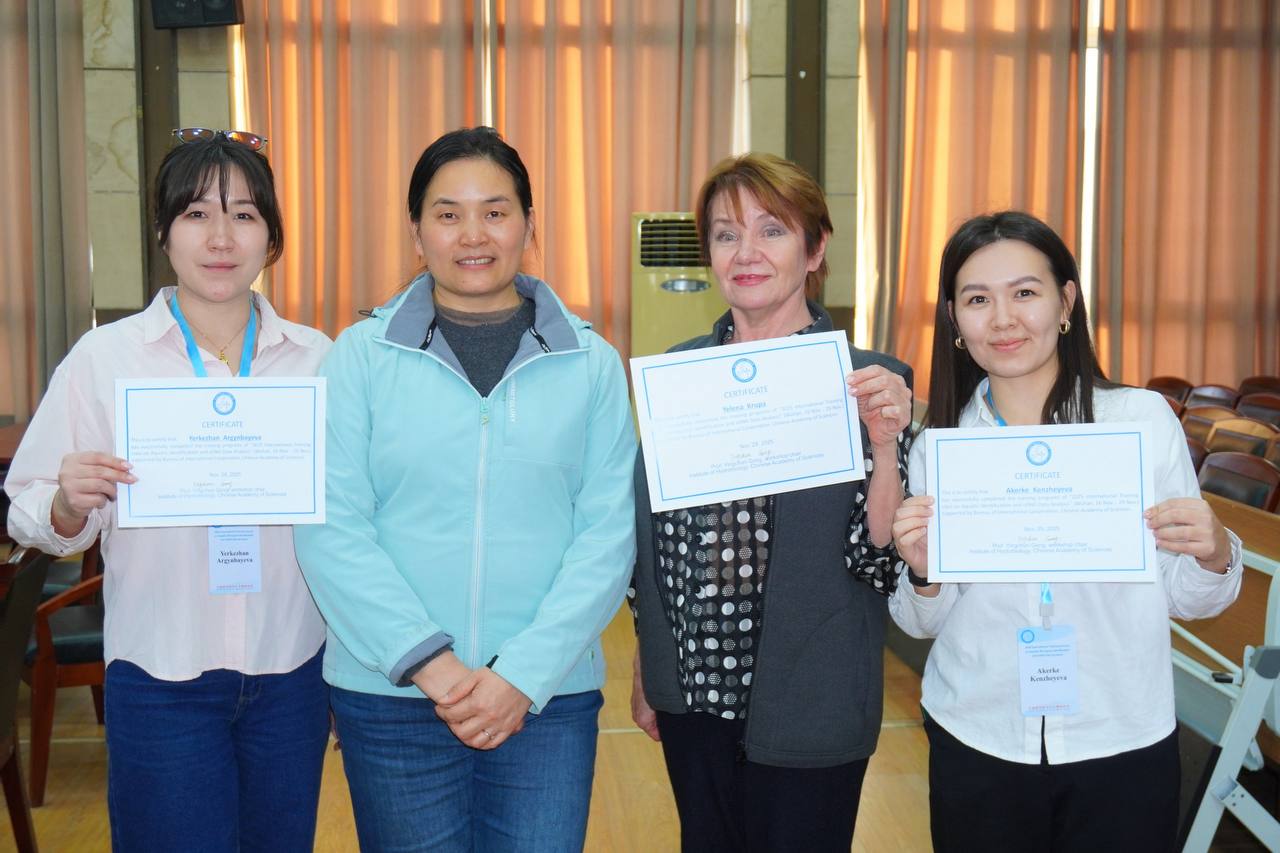
In the photo: Prof. E.G. Krupa; researcher and doctoral student E.M. Argynbaeva; junior researcher and doctoral student A.N. Kenzheeva
The program also included excursions and cultural-scientific events. Participants visited the Museums of the History of Hydrobiology and Aquatic Organisms, explored scientific collections and the history of hydrobiological research in China, toured the Botanical Garden of the Chinese Academy of Sciences and several research facilities related to aquatic ecosystem studies and conservation.
The knowledge and skills gained during the training will be applied in scientific research at the Institute of Zoology of Kazakhstan — to improve freshwater ecosystem monitoring, enable early detection of ecological changes and develop scientifically grounded measures for protecting the country’s water resources.
International scientific cooperation is not only an exchange of experience but also a real contribution to the future of ecology and the preservation of Kazakhstan’s water resources.
17.12.2025
Photo: E.M. Argynbaeva