



On March 18, an online seminar on the rules of the international CITES Convention regarding the import and export of animals was held at the Institute of Zoology. The speaker of the seminar was Marina A. Chirikova, Secretary of the CITES Scientific Authority of the Republic of Kazakhstan.
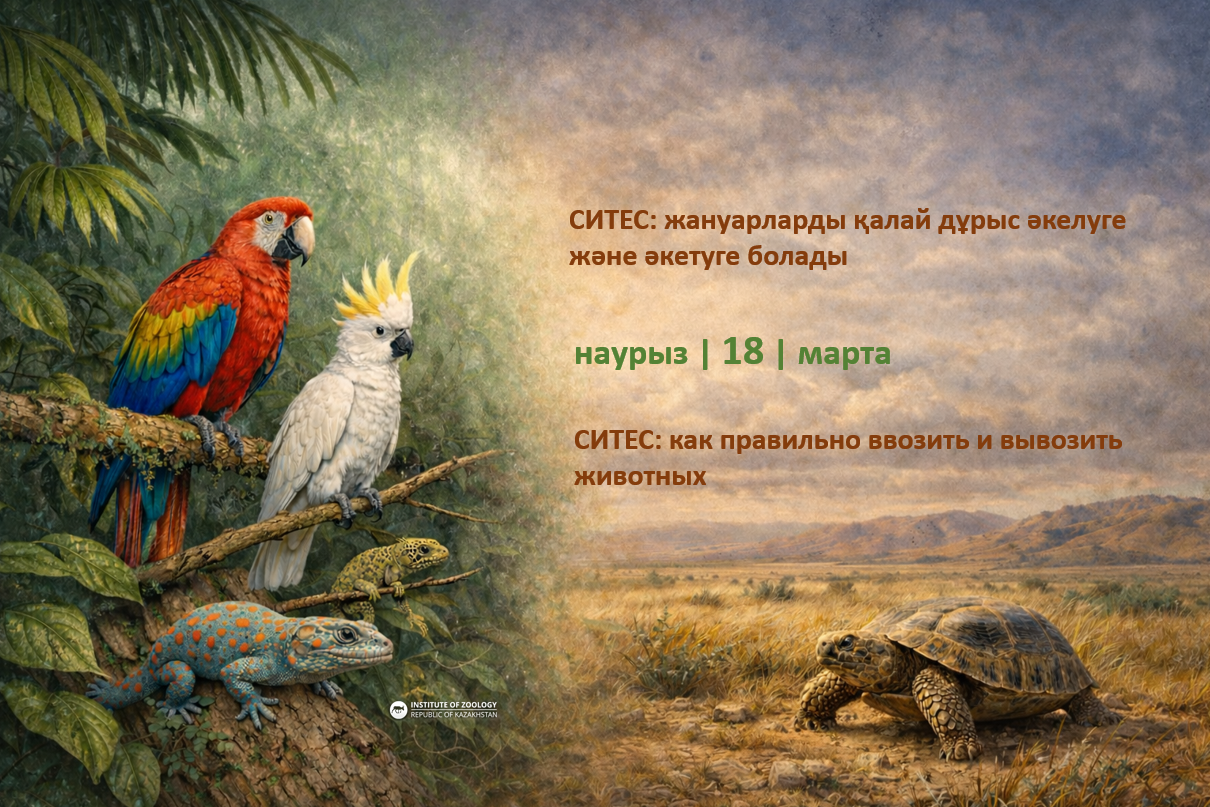
In the modern world, international trade in wild animals and plants is strictly regulated, as it may pose a serious threat to the conservation of biological diversity. One of the key international instruments aimed at preventing the overexploitation of species is the Convention on International Trade in Endangered Species of Wild Fauna and Flora (CITES) – the Convention on international trade in endangered species of wild fauna and flora, which has been signed by Kazakhstan and 184 other countries.
The online seminar focused on the following issues:
- what CITES is and the main purpose of the Convention;
- how species are classified according to three levels of threat;
- which specific animal species are subject to CITES regulation;
- what permits are required for their import, export and re-export;
- what requirements apply when transporting live animals and biological specimens across the state border;
- what violations are most commonly identified during customs control;
- and other related issues.
More than 40,900 species – including approximately 6,610 animal species and 34,310 plant species – are protected under CITES from overexploitation resulting from international trade. They are listed in the three CITES Appendices. Species are grouped in the Appendices according to the degree of threat posed to them by international trade.
For example, Appendix I includes about 704 animal species and 395 plant species that are directly threatened with extinction and for which international (commercial) trade is generally prohibited.
Particular attention during the seminar was paid to the CITES rules concerning international trade in animals and plants listed in Appendices II and III. The speaker reviewed specific examples from various animal groups, as well as derivatives and manufactured products. It was emphasized that special permits are required for trade or transportation of these species.
The information generated considerable interest among participants, and the discussion covered specific species of ungulates and carnivorous mammals, primates, birds of prey, parrots, reptiles, aquarium fish, invertebrates, and others.
The presentation highlighted the importance of checking animal species in the CITES Appendices on specialized official websites before breeding or trading them. In particular, concern was expressed regarding illegal online trade in parrots in Kazakhstan and certain other animal species.
During the online meeting, special attention was also given to CITES regulations and documentation requirements for the import/export of animals into and from Kazakhstan. The seminar moderator, Marina A. Chirikova, explained that most parrot species require special certificates for trade and emphasized the importance of obtaining proper documentation when purchasing birds from breeders or pet shops.
Participants were shown how to use official websites to verify whether specific animal species are included in the CITES Appendices. The speaker also described the procedure for submitting applications for the necessary permits through scientific and administrative authorities.
The presentation also addressed issues related to the breeding of certain birds, such as canaries and finches. Although these species are currently not included in the CITES Appendices, proper documentation should still be maintained to ensure legal protection.
While many countries strictly control and regulate trade in species listed in the CITES Appendices, some others may not ensure equally strict compliance with the Convention’s rules, which may result in fines for illegal transportation.
The seminar was attended by representatives of scientific and environmental organizations, NGOs, students of biological disciplines, breeders, and individuals involved in the breeding, transportation or use of wildlife specimens.
The CITES Scientific Authority for fauna in Kazakhstan is represented by:
for terrestrial animal species – Institute of Zoology, Committee of Science, MSHE RK, contact: office@zool.kz
for aquatic animal species – Research and Production Center of Fisheries, contact: info@fishrpc.kz
More information about CITES and obtaining permits for export/import/re-export of animals can be found on the Institute of Zoology website in the CITES section.
18.03.2026