



On April 16–18, 2026, the Institute of Zoology (Almaty) hosted the International scientific online conference “Advances and challenges of modern herpetology”, dedicated to the 95th anniversary of the renowned Soviet and Kazakh herpetologist Zoya Karpovna Brushko (1931–2023).
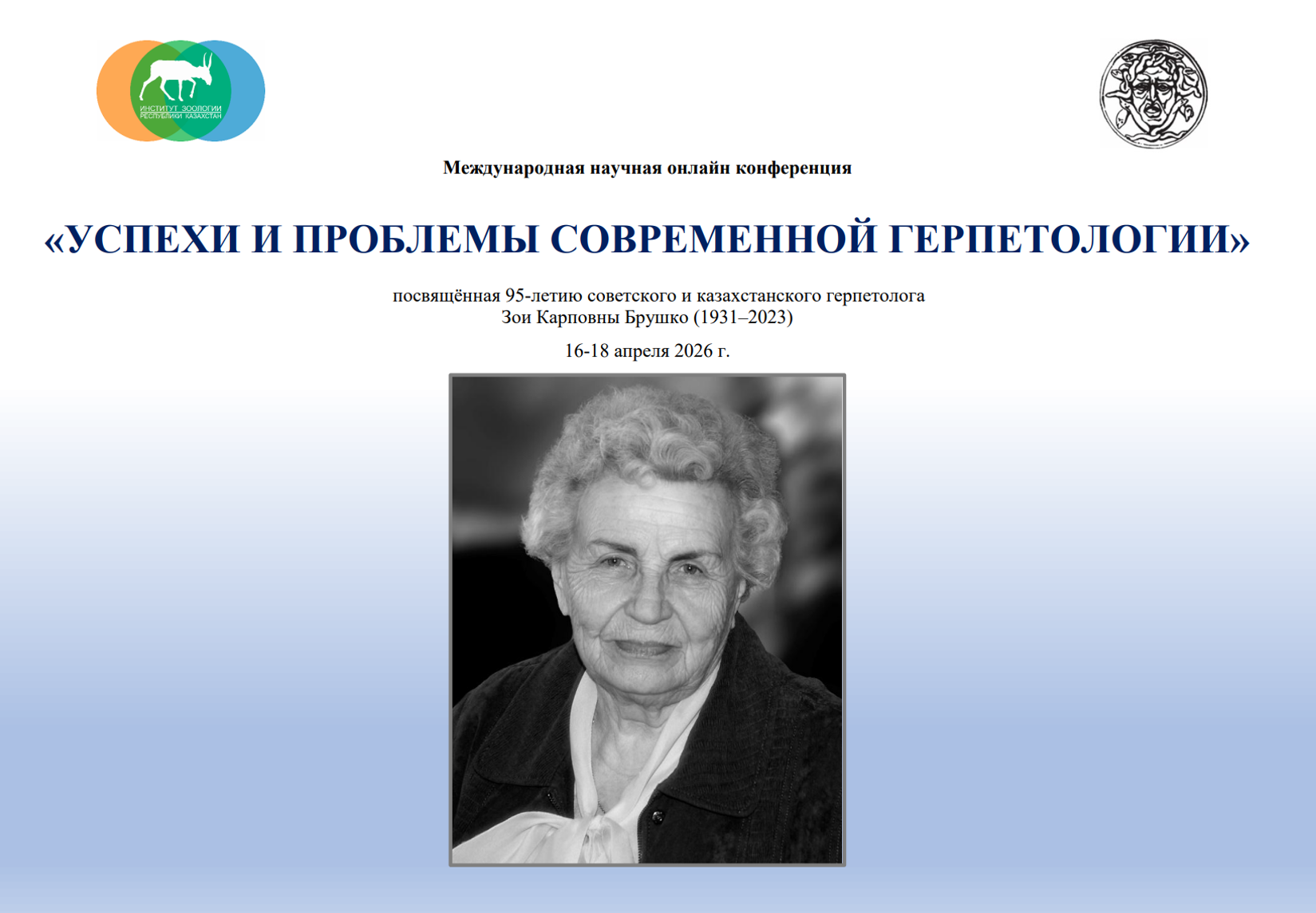
The herpetological conference dedicated to the 95th anniversary of Zoya Karpovna Brushko was organized by the Institute of Zoology of the Science Committee of the Ministry of Science and Higher Education of the Republic of Kazakhstan with the support of the A.M. Nikolsky Herpetological Society at the Russian Academy of Sciences and held with the direct participation of Tatyana Nikolaevna Duisebaeva and Marina Alexandrovna Chirikova (Institute of Zoology RK).
The three-day online conference “Advances and challenges of modern herpetology” brought together participants from four CIS countries: Kazakhstan, Russia, Azerbaijan, and Uzbekistan.
At the opening of the conference, welcoming remarks were delivered by R.V. Yashchenko, General Director of the Institute of Zoology of the Republic of Kazakhstan, and L.F. Mazanaeva, Head of the Department of Zoology and Physiology at Dagestan State University and President of the A.M. Nikolsky Herpetological Society of the Russian Academy of Sciences.
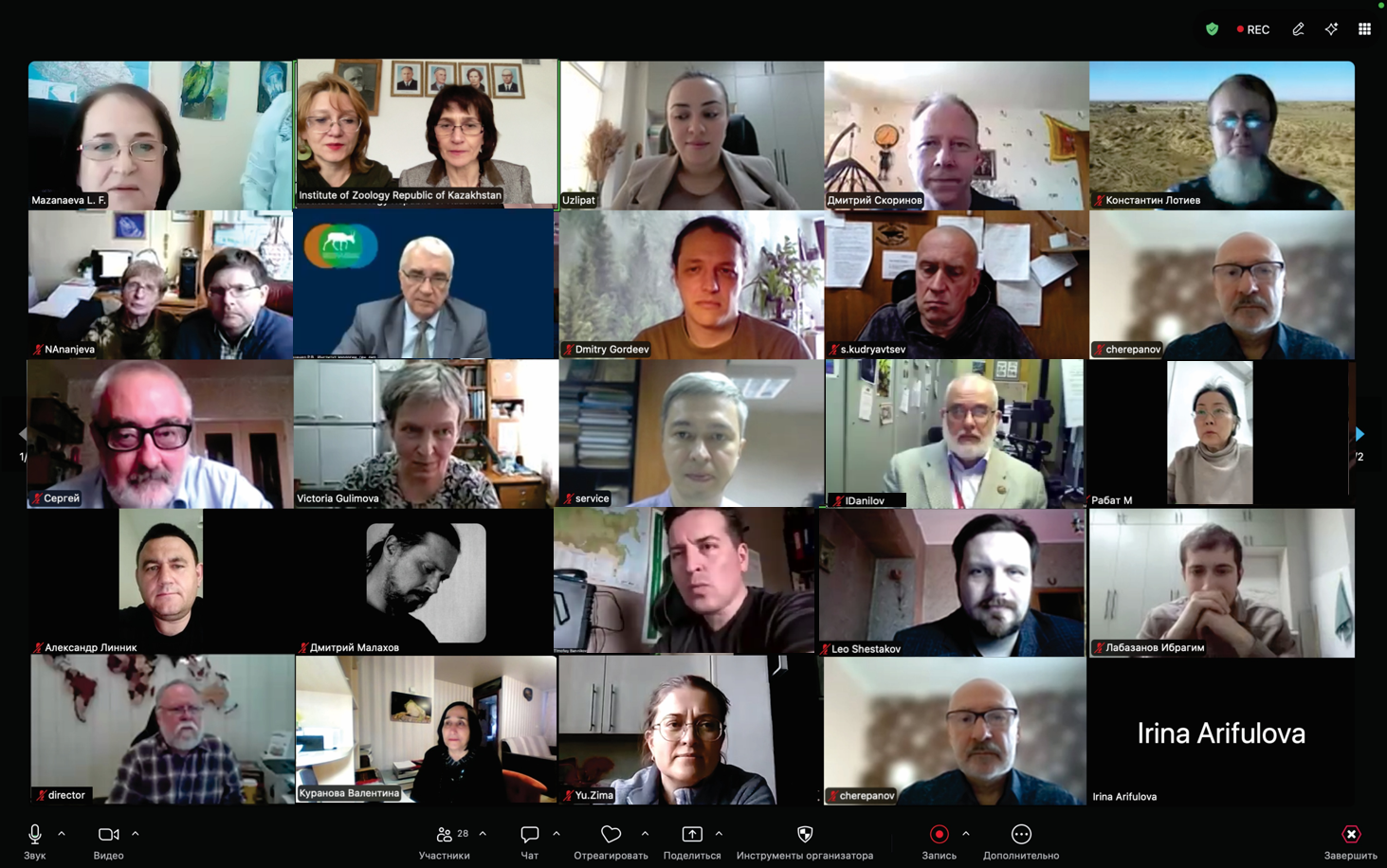
In total, about 70 participants attended the conference, including 28 speakers (53 including co-authors), session moderators, and interested listeners from various scientific and educational institutions of the participating countries.
The main goal of the online conference was to assess recent progress in research and conservation of herpetofauna, exchange ideas, and pass on experience to the younger generation of herpetologists.
A total of 5 plenary and 25 sectional presentations were delivered. The reports covered both extant and fossil herpetofauna, including taxa of tailed and tailless amphibians, turtles, lizards, and snakes, and addressed virtually all levels of biological organization, from molecular-genetic to biocenotic.
The participants addressed issues of phylogeny and systematics, morphology and molecular genetics, ecology and physiology, biogeography and paleogeography, and the ethology of amphibians and reptiles, as well as their conservation in–situ and ex–situ. A wide range of research methods was presented, including modern approaches such as electronic tagging (Perm State Humanitarian Pedagogical University) and the latest methods such as neural network modeling (Petrozavodsk State University).
In the context of increasing anthropogenic transformation of natural habitats and deterioration of ecosystem conditions, special attention was given to the conservation of herpetofauna. In particular, specialists from the Institute of Zoology of the Academy of Sciences of Uzbekistan and the Zoological Museum of Moscow State University emphasized the need to combine traditional conservation practices for endangered populations and species with a new approach for herpetology—the establishment of Key Herpetological Areas (KHA).
RECORDINGS OF THE 3 DAYS OF THE CONFERENCE “Advances and challenges of modern herpetology”
Recordings of all conference days are available on the Institute of Zoology YouTube channel:
Day 1 of the conference
Day 2 of the conference
Day 3 of the conference
Following the conference, a resolution was adopted with the following proposals:
1) To recognize the conference as successful and productive.
2) To note the high level of presentations, the expansion of research geography, and the diversity of research topics using modern methods.
3) To acknowledge the stable work of the herpetological school of Dagestan State University and the emergence of talented young researchers in Kazan, Kaluga, Petrozavodsk, and Tomsk State Universities.
4) To intensify efforts to establish Key Herpetological Areas (KHA) in CIS countries by:
a) developing criteria for identifying KHAs;
b) selecting the most promising territories;
c) promoting the initiative through relevant administrative and governmental bodies.
5) To strengthen coordination and enhance collaboration between major herpetological centers and academic and educational institutions across the CIS to improve the overall level of herpetological research.
04.05.2026