



From April 28 to 30, 2026, in Almaty, the Institute of Zoology of the Republic of Kazakhstan, together with the Almaty Branch of the National Center for Biotechnology and the Institute of Zoology of the Zoological Society of London, held a regional seminar on laboratory diagnostics.
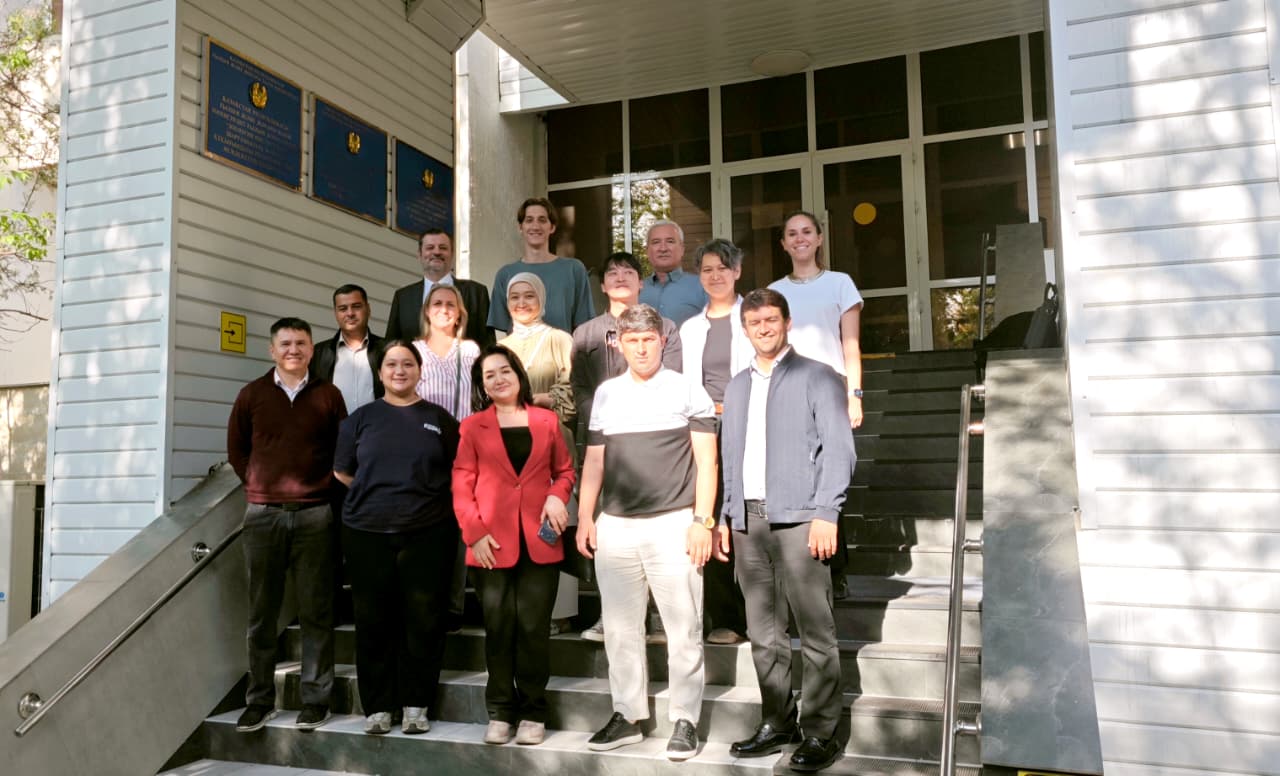
Over three days, specialists from Kazakhstan, Kyrgyzstan, Tajikistan, Turkmenistan, and Uzbekistan participated in a training program to improve laboratories’ capacity to detect zoonotic pathogens in wild animals using Sanger sequencing.
The seminar was opened by Vitaliy Gromov, Adviser to the Director General of the Institute of Zoology of the Republic of Kazakhstan. In his speech, he presented the IKI project “One Health for Nature Conservation: Enhancing Landscape Resilience to Emerging Zoonotic Diseases through Consolidation of Nature Conservation Systems in Central Asia,” implemented by the International Union for Conservation of Nature (IUCN) in all Central Asian countries, and outlined the role of the Institute of Zoology of the Republic of Kazakhstan in implementing this project in Kazakhstan.
Dr. Fay Webster, Postdoctoral Researcher at the Institute of Zoology of the Zoological Society of London in the field of the One Health concept, delivered a presentation on the relationship between the emergence of zoonotic diseases, biodiversity loss, and climate change. The discussion addressed the specific ways these factors interact and their significance for the Central Asian region.
Participants also gave special attention to the collection of wildlife samples in field conditions. They reviewed factors affecting the quality and informativeness of samples, common mistakes in sample handling, and the impact of these aspects on laboratory diagnostic results and disease detection.
The practical part of the seminar focused on biosafety and modern molecular diagnostic methods. Elina Maltseva, Head of the Biosafety and Protection Department of the Almaty Branch of the National Center for Biotechnology, presented key standards for working with potentially hazardous samples and measures for protecting laboratory personnel. Zhanna Berdygulova demonstrated the safe use and inspection procedures for biological safety cabinets. Dinara Naizabayeva introduced participants to the workflow of Sanger sequencing on the ABI 3500 sequencer. Andrey Zhigaylov presented testing algorithms and approaches to primer design used in the study of wildlife samples.
The seminar also covered modern approaches in wildlife disease ecology. Participants discussed the integration of various methods, including sequencing, serological studies, environmental DNA and RNA analysis, as well as the use of machine learning methods for a more accurate understanding of the causes of disease emergence and routes of transmission.
The seminar helped broaden the participants’ professional knowledge in the area of safe work with potentially infected samples, the use of biological safety cabinets, and the selection of personal protective equipment depending on the type of procedure. In addition, participants received up-to-date information on international and national standards regulating these areas.
In the molecular diagnostics section, participants examined in detail the preparation of PCR reactions for Sanger sequencing, operation of the ABI 3500 sequencer, interpretation of sequencing results, and primer design for wildlife samples. The seminar made an important contribution to strengthening scientific and professional cooperation among Central Asian countries and created a foundation for the further development of joint research in zoology, biosafety, and zoonotic disease monitoring.
20.05.2026