


Researchers from the Laboratory of Paleozoology of the Institute of Zoology of the Republic of Kazakhstan visited the museum at Khoja Akhmet Yassawi International Kazakh-Turkish University. Their attention was drawn to a dinosaur skeleton discovered during excavations in the Turkistan Region.
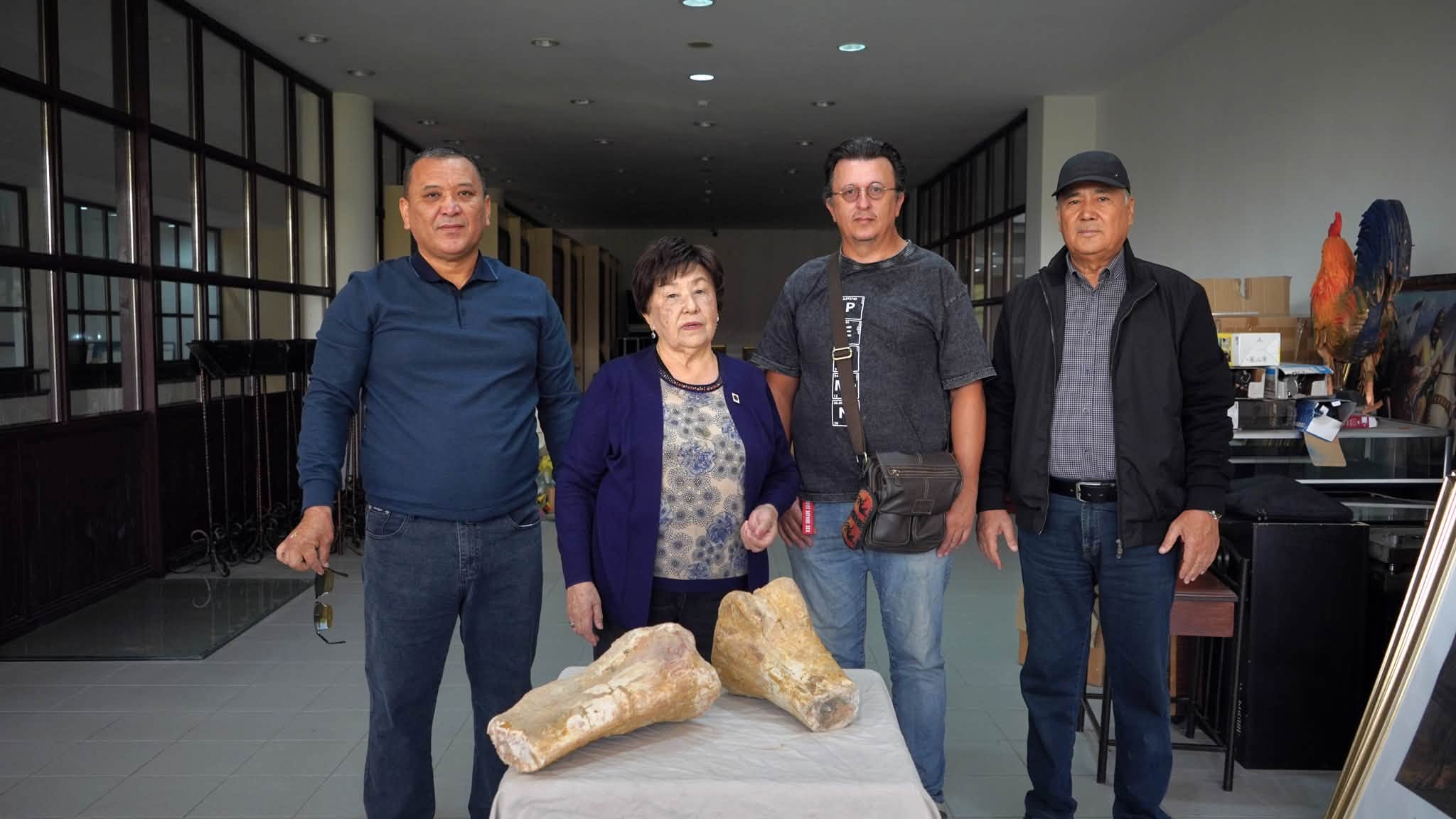
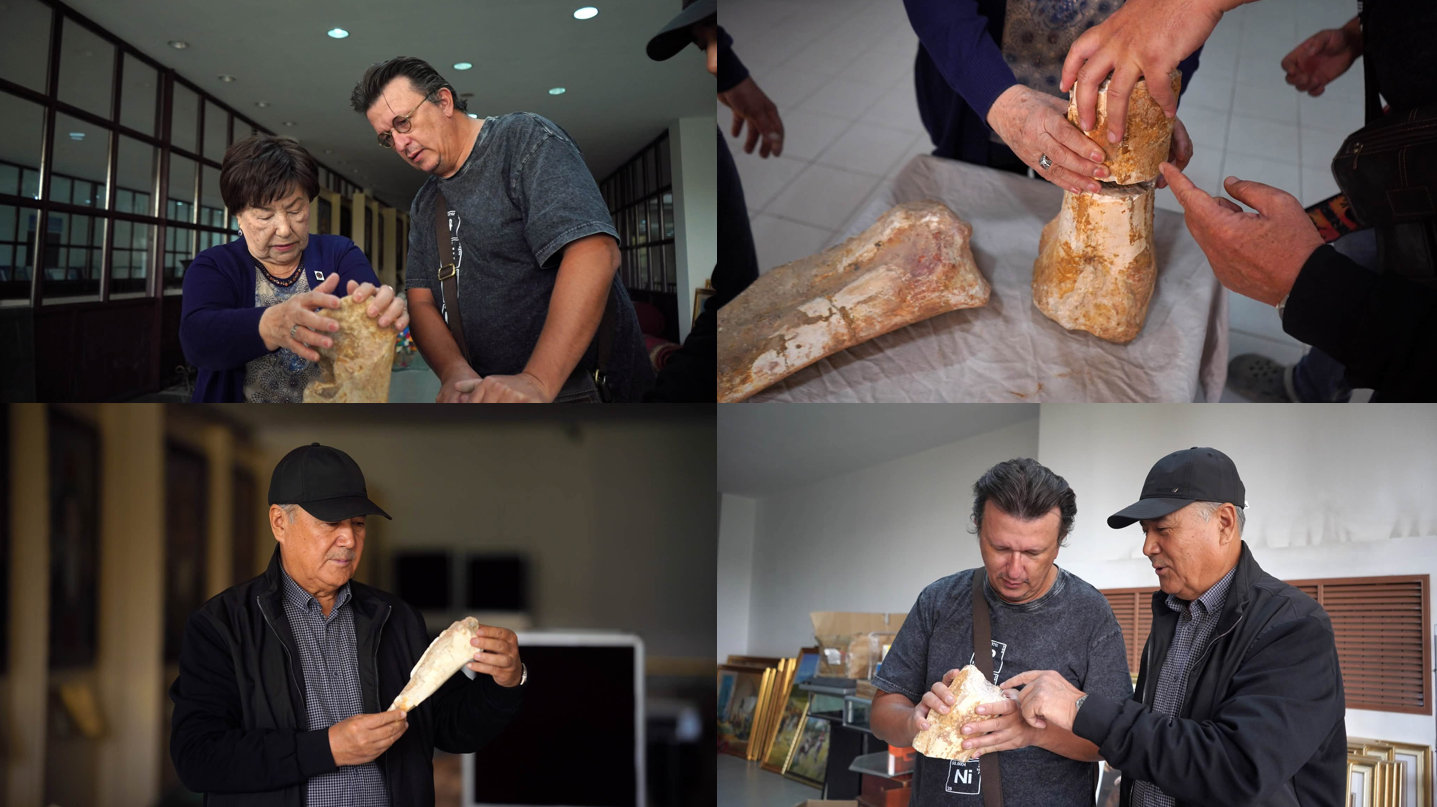
Peruza Ablayevna Tleuberdina, Head of the Laboratory of Paleozoology of the Institute of Zoology, and Andrey Rossiysky, Adjunct Researcher at the Institute, visited the museum of the Research Institute of Archaeology at Khoja Akhmet Yassawi University on October 5 to examine a dinosaur skeleton preserved in the museum collection.
The main purpose of the visit was to conduct a comprehensive study of vertebrate remains discovered 21 years ago near the village of Maidantal in the Turkistan Region that had not previously been subjected to professional analysis.
The researchers met with Kopzhasar Zhetibayev, Director of the Institute of Archaeological Research, and Sagynbay Murgabayev, Leading Researcher and archaeologist at the Institute.
P.A. Tleuberdina is a renowned paleontologist who has made a significant contribution to the study of the evolution and phylogeny of fossil animals of the Cenozoic and Mesozoic eras in Kazakhstan.
“The discovery of dinosaur bone remains near the village of Maidantal (Turkistan Region) by our colleague Sagynbay Serikbayuly is a unique find for Kazakhstan’s science. We had heard about this locality before, but at the time there was no opportunity to organize a field expedition or conduct a comprehensive study,” noted Peruza Ablayevna.
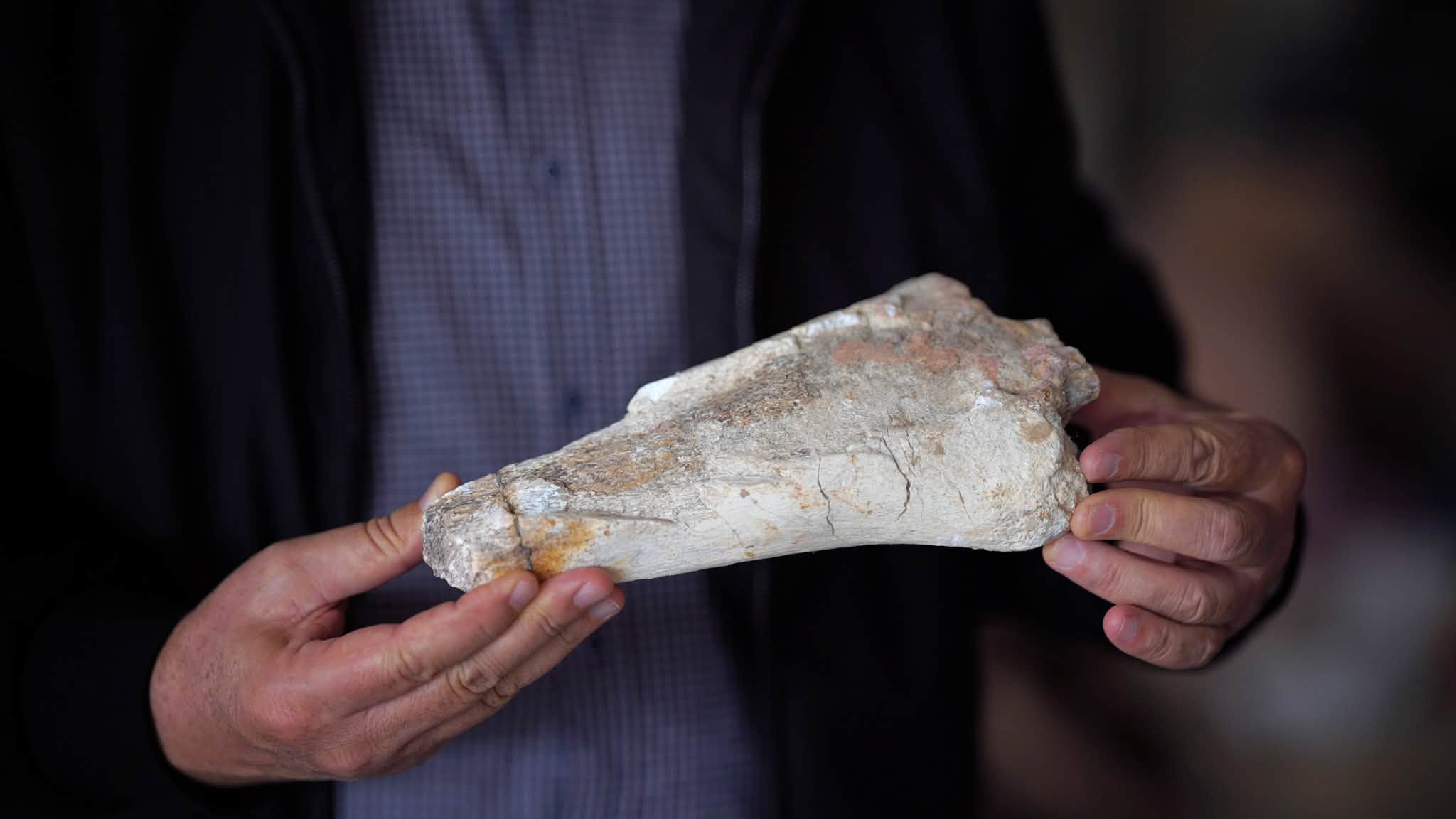
Immediately after the initial examination of the specimens, Tleuberdina began their preliminary classification based on morphological structure and size characteristics. The bones, which had remained in bottom sediments over geological time, gradually fossilized. However, the characteristic “red color” visible on the fractured surfaces of the bones requires detailed laboratory analysis of their microstructure. These skeletal remains still hold many secrets that science has yet to uncover.
It is worth noting that prior to the meeting, the group of scientists, together with Sagynbay Murgabayev, conducted preliminary excavations in the vicinity of Maidantal. In the moisture-softened layers, the boundary between the Mesozoic deposits and the overlying Paleogene horizons was clearly visible, allowing the researchers to accurately determine the stratigraphic position of the locality.
The Institute of Archaeology and the Laboratory of Paleozoology of the Institute of Zoology plan to cooperate in conducting fundamental research on the discovered specimens. Plans also include organizing a unique exhibition of the dinosaur skeleton at the university museum using modern technologies.
07.10.2026
Source of information: website of Khoja Akhmet Yassawi University