



Manash Kozybayev studied the history of Kazakhstan. Now his name has become part of the history of discoveries about the country’s wildlife.
Science preserves memory
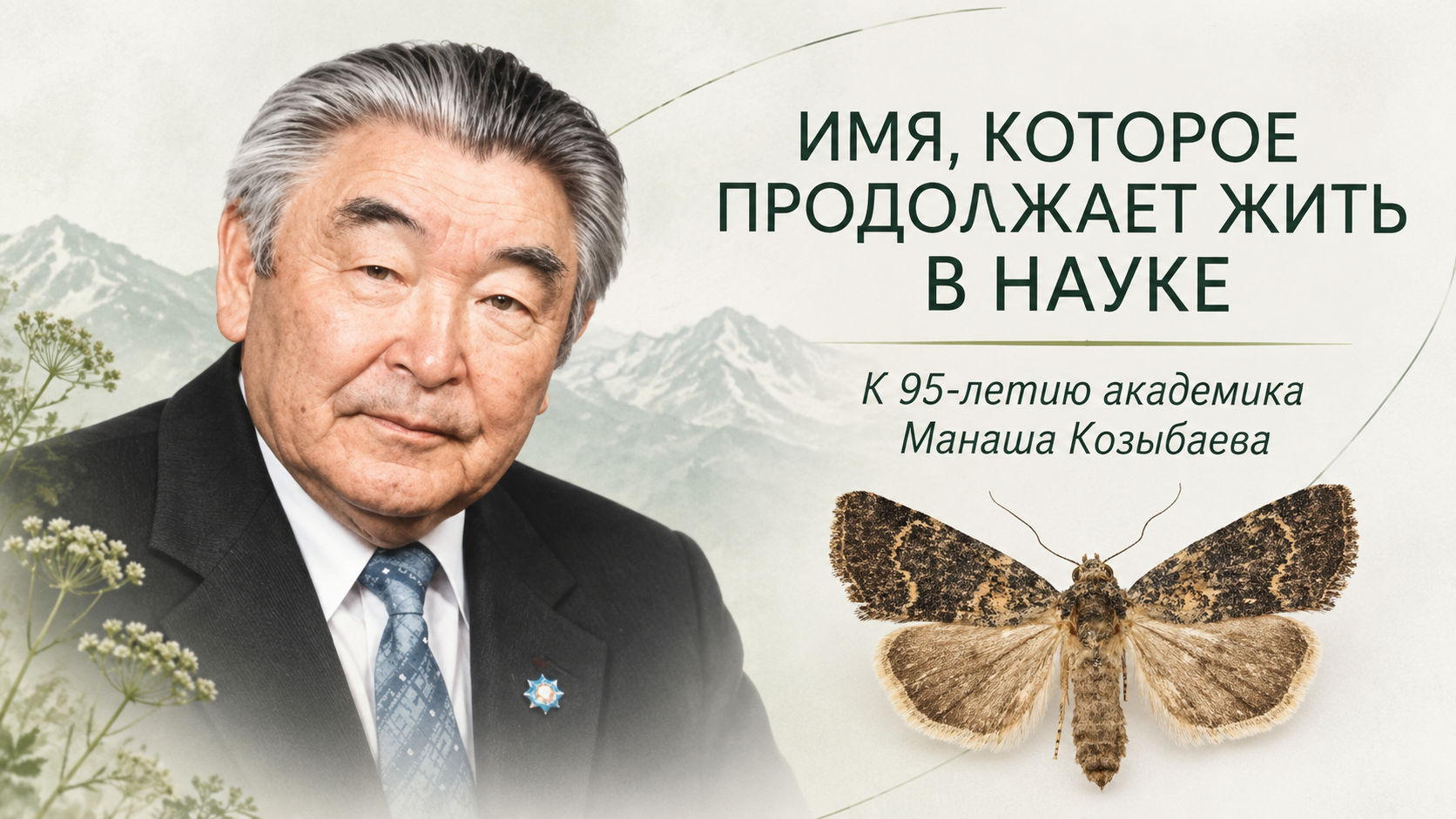
A new moth species, Scythobrya kozybayevi, has been named in honor of Academician Manash Kozybayev. Its description was published on November 12, 2026, in the scientific journal “Entomological Studies”.
Manash Kabashevich Kozybayev was an outstanding Kazakhstani historian and academician who devoted his life to studying the country’s past. His works contributed to a deeper understanding of the complex chapters of Kazakhstan’s history and helped preserve historical memory. Today, North Kazakhstan University bears his name, and now his name has also been immortalized in the name of a species discovered on Kazakhstani soil.
In the year marking the 95th anniversary of Manash Kozybayev’s birth, this dedication has special significance. The authors named the new species in memory of the scientist, expressing their respect for his scientific legacy. Thus, two paths of exploring Kazakhstan have come together in a single discovery: the history of its people and the study of its nature.
The new moth was described by entomologists Sergey Titov and Anton Volynkin, representing scientific institutions in Kazakhstan and the United Kingdom. Sergey Titov is affiliated with the Institute of Zoology and Alkey Margulan Pavlodar University, while Anton Volynkin is affiliated with the UK-based African Natural History Research Trust.
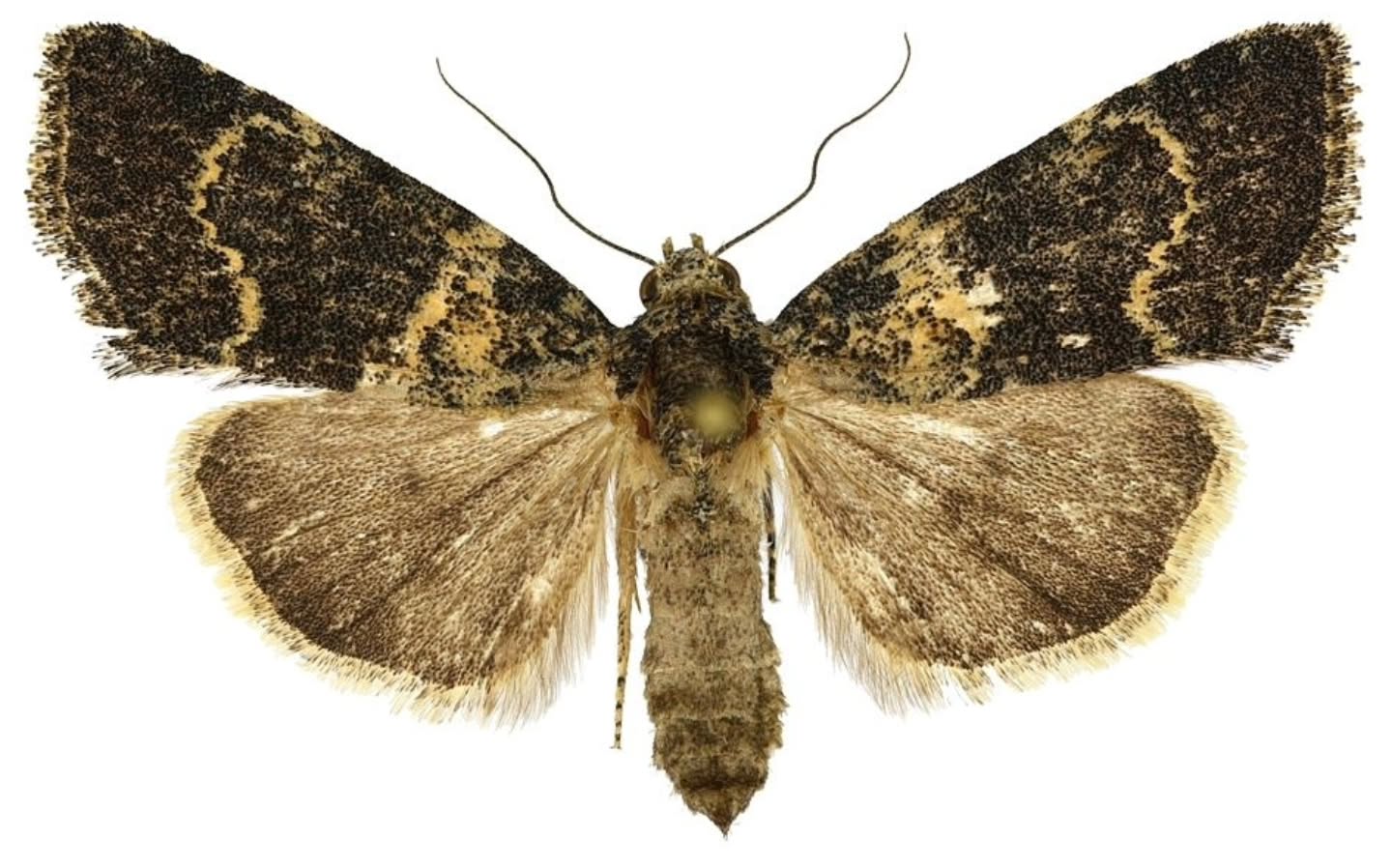
Scythobrya kozybayevi is a small nocturnal moth of the family Noctuidae, with graphite-gray forewings and fine ochre lines. So far, it is known only from the Arkaly Mountains in eastern Kazakhstan, an isolated mountain range south of the Saur-Tarbagatai. How widely this species is distributed remains to be determined.
Behind the few lines describing the new species lie years separating the original field discovery from its scientific recognition. The specimens were collected in the Bakaly Gorge in June 2013. Initially, they were tentatively assigned to an already known species. However, detailed examination of their morphology and comparison with related moths revealed that the researchers were dealing with a distinct species previously unknown to science.
More than thirteen years passed between the collection of the material and its publication. This story illustrates why scientific collections are so important: they preserve evidence of natural diversity whose significance may become apparent only much later. Recognizing a discovery requires knowledge, comparative material and meticulous work by specialists.
Kazakhstan’s nature is remarkable, and these are more than just words. Even a small moth from an isolated mountain range can turn out to be unknown to science. Such discoveries show how much remains to be learned about our country, its landscapes and its wildlife.
The description of a new species is the beginning of further research. Where else does it occur? Which plants is it associated with? What is its life cycle? Do its habitats require protection? Answering these questions will require new expeditions and observations.
Manash Kozybayev studied the past, helping future generations gain a deeper understanding of their country. Researchers studying nature continue to expand our knowledge of Kazakhstan in their own way. Now the academician’s name is also connected with this quest through the discovery of a small moth that has become a new page in the story of science.
Scientific publication:
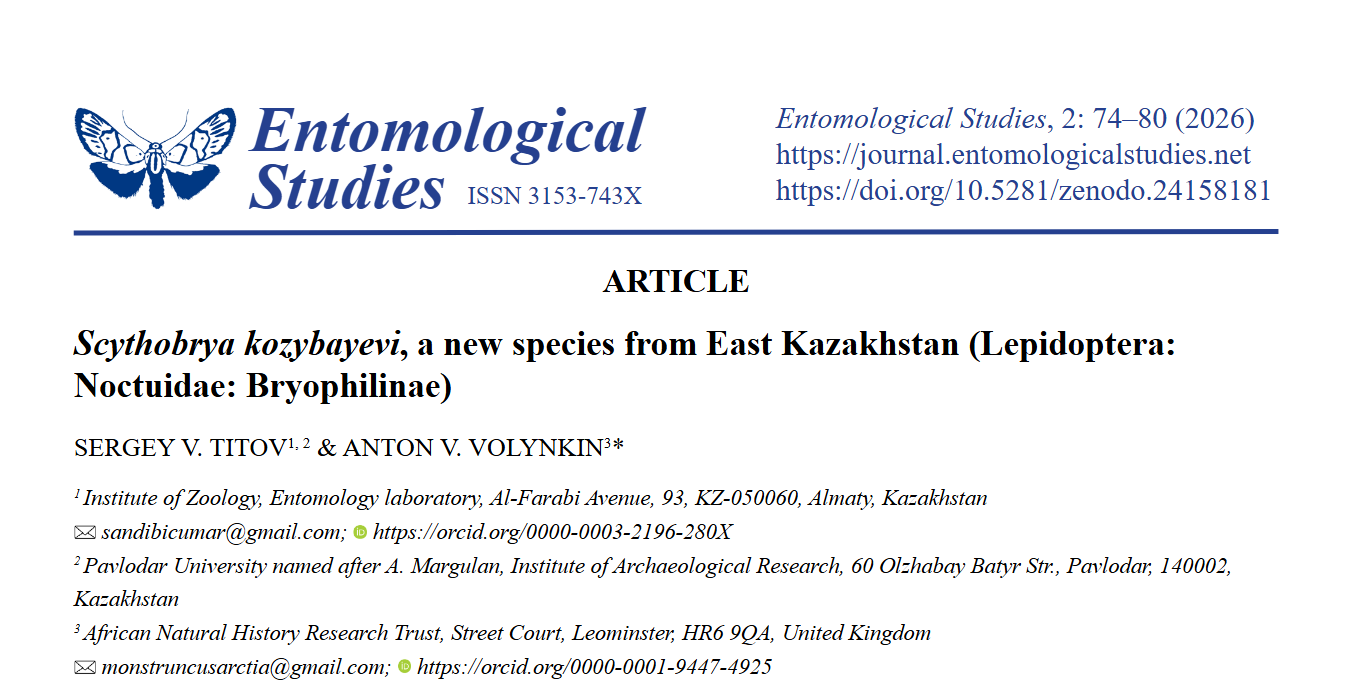
Titov, S. V. & Volynkin, A. V. (2026). Scythobrya kozybayevi, a new species from East Kazakhstan (Lepidoptera: Noctuidae: Bryophilinae). Entomological Studies, 2: 74–80. DOI: 10.5281/zenodo.24158181
Read the article: Entomological Studies
13.11.2026