



As part of the cultural program of the International Scientific Conference “Current State and Prospects for the Conservation of Biodiversity of the Western Tien Shan”, participants visited the Main Botanical Garden in Almaty and the Institute of Botany and Phytointroduction.
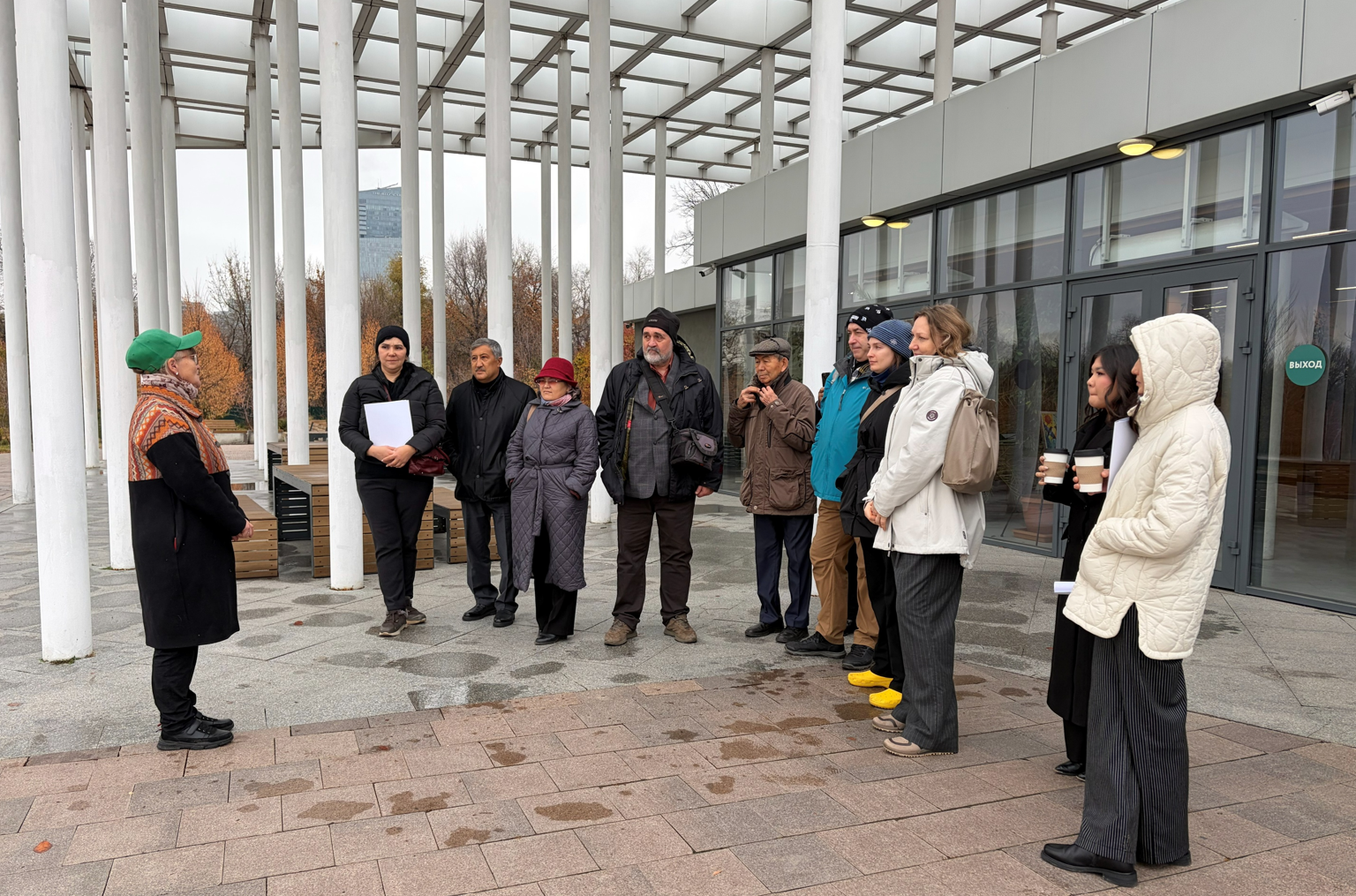
A scientific conference is not only about presentations, discussions and the exchange of professional experience, but also an opportunity to explore the natural and scientific heritage of the city where it is held.
The excursions for conference participants were conducted by staff of the Institute of Botany and Phytointroduction.
Senior Researcher Svetlana Vyacheslavovna Nabieva introduced the guests to the collections and displays of the Botanical Garden, while Head of the Seed Bank Laboratory Tansara Shayakhmetovna Murzatayeva revealed the secrets of preserving plant genetic diversity.
Botanical Garden: fascinating stories of familiar plants
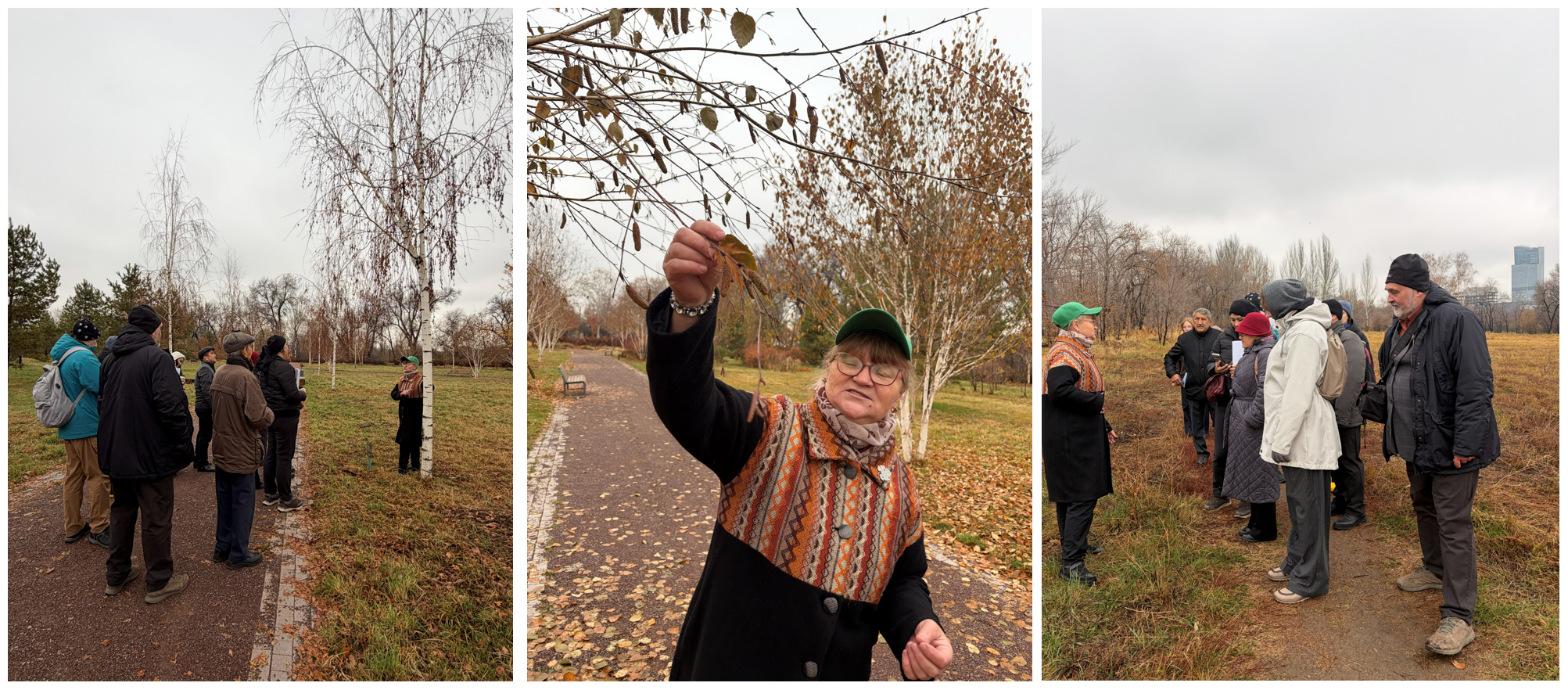
A walk through the Main Botanical Garden turned into a true journey through the world of plants. Participants learned many interesting facts about trees that might seem familiar to everyone.
One example is the birch, which is distributed predominantly in the Northern Hemisphere. There are about 60 species worldwide, while the collection of the Botanical Garden in Almaty contains as many as 24 birch species! The oldest trees are more than 70 years old.
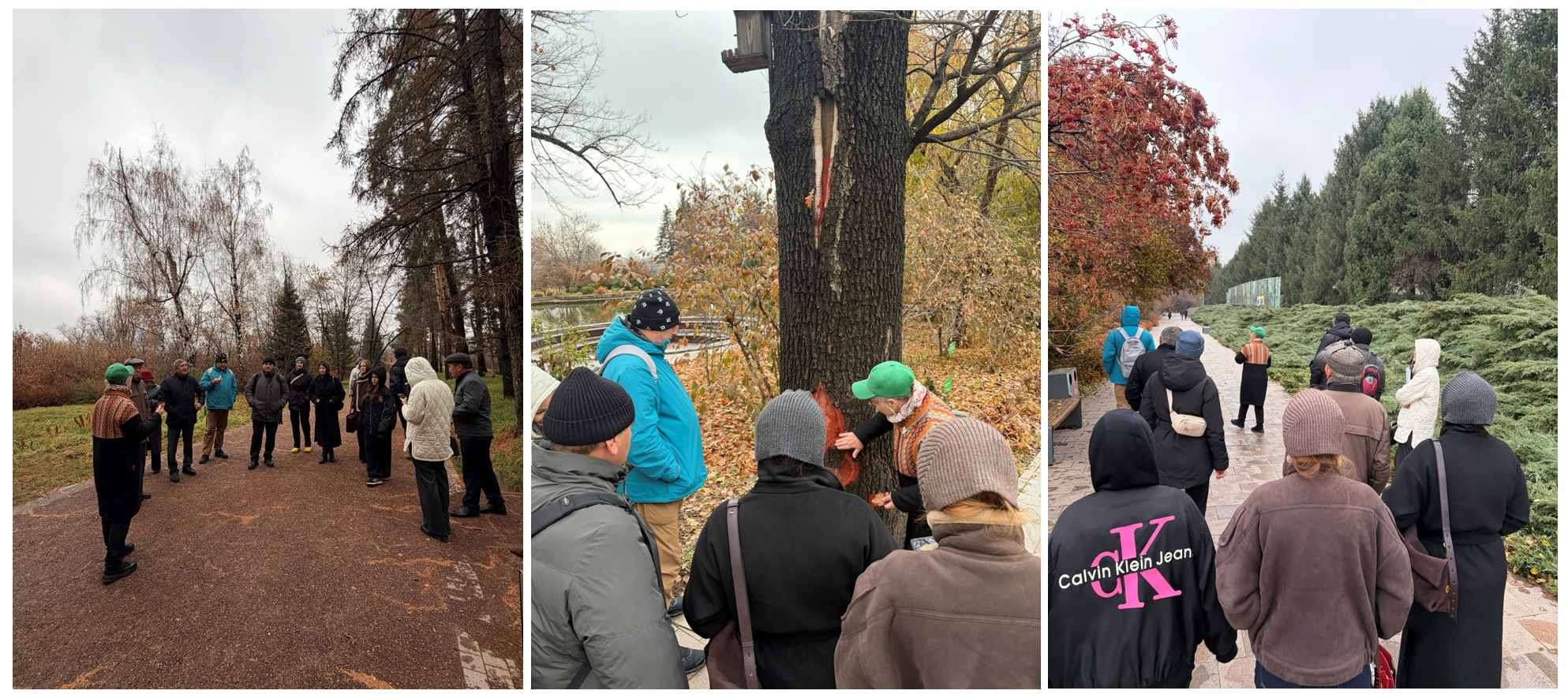
The story of the oaks proved no less interesting. There are approximately 600 oak species worldwide, and about 20 species can grow under our climatic conditions. Eight North American species are represented in the Botanical Garden display. Other species, including English oak and Mongolian oak, can be found in the garden’s other dendrological collections.
During the excursion, participants also learned about the unexpected properties of chicory. This familiar plant can often be found in urban environments. It turns out that dry chicory powder contains saponins, natural substances with cleansing properties. Thanks to these substances and its mildly abrasive texture, chicory can even be used to remove fresh grease and deposits from dishes. Such is the hidden secret of this familiar plant.
The Botanical Garden also has a collection of 320 cultivar clones of the Sievers apple, collected from the wild at different times and in different locations.
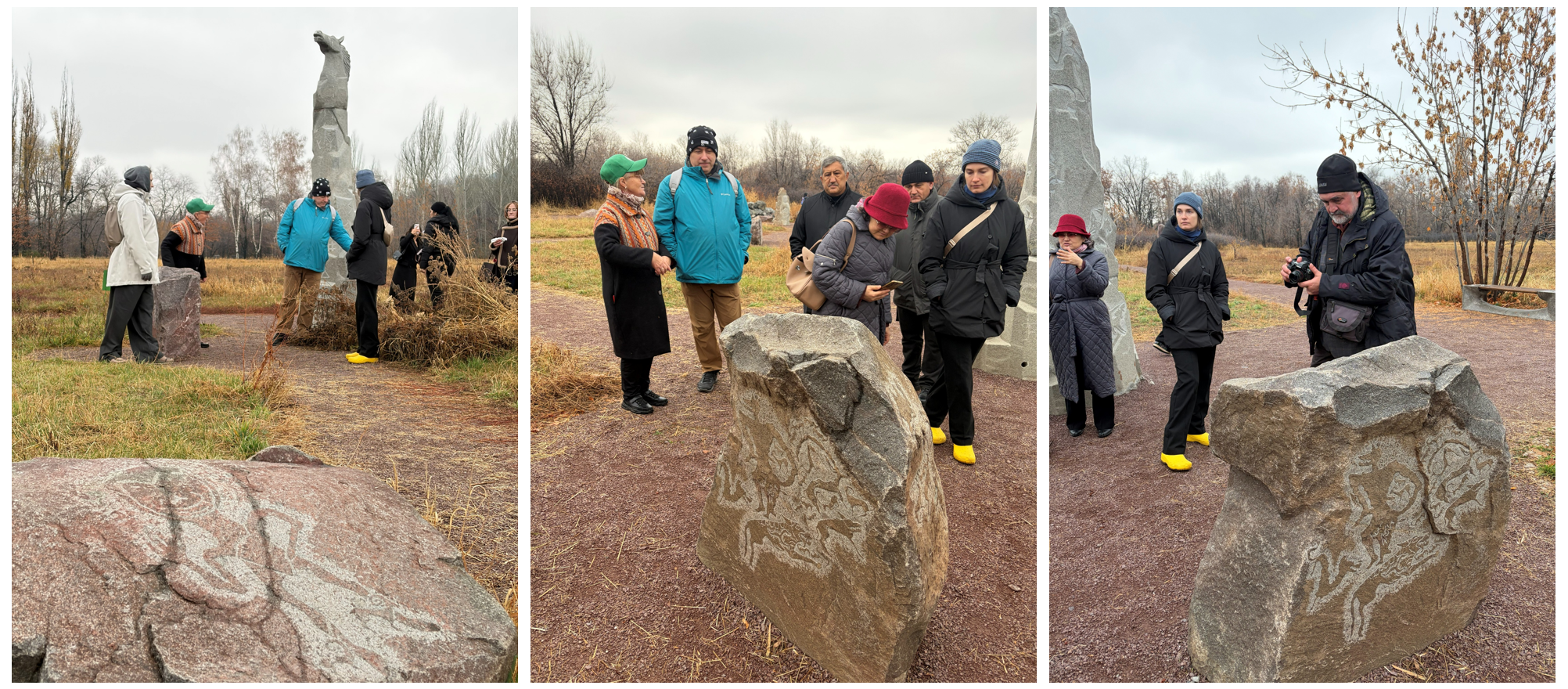
Participants also visited the “Arkalan” Petroglyph Park, which features replicas of actual rock carvings. Most of these are petroglyphs dating from the ancient Turkic period, although there are also earlier examples from the Saka period and even the Bronze Age. The park, located in the reserve area of the Botanical Garden, opened two years ago, and there are plans to recreate a section of steppe vegetation endemic to Kazakhstan here.
Seed Bank: natural heritage preserved for the future
The second part of the excursion was devoted to one of the Institute’s most important scientific collections, the Seed Bank of the Natural Flora of Kazakhstan.
Established in 2013, today it represents a unique scientific collection of strategic importance for conserving the country’s plant diversity. Its collection comprises approximately 6,600 seed samples representing 1,638 species of wild plants.
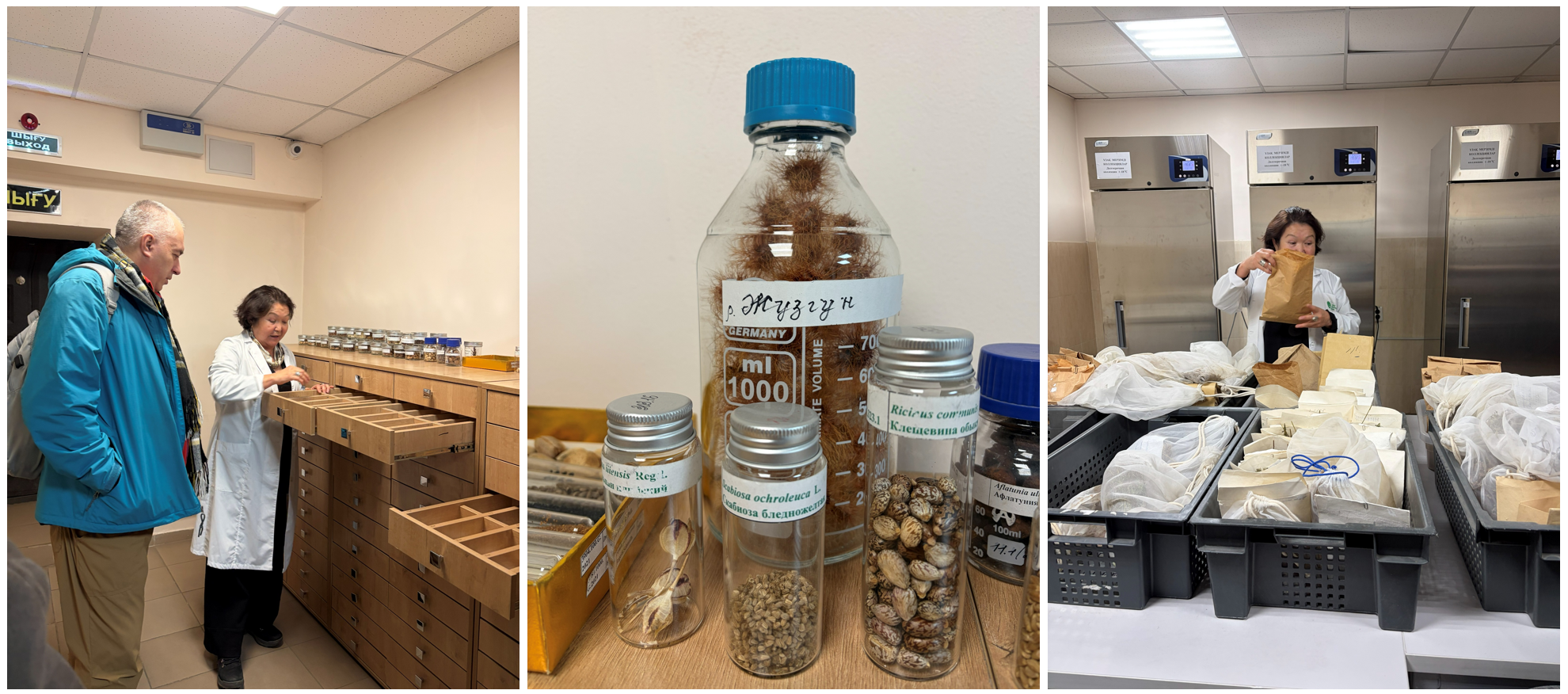
The Seed Bank preserves seeds of rare, endemic and Red Data Book plant species collected during scientific expeditions and obtained through international scientific exchange. The collection is continuously expanding.
The main objective of the Seed Bank is to preserve the genetic diversity of Kazakhstan’s natural flora. In essence, it serves as a kind of insurance fund for the country’s plant life, important not only for science and ecology but also for future food security.
At the end of the excursion, the guests received atlases of plant seeds from the Almaty and Ulytau regions prepared by the Seed Bank Laboratory.
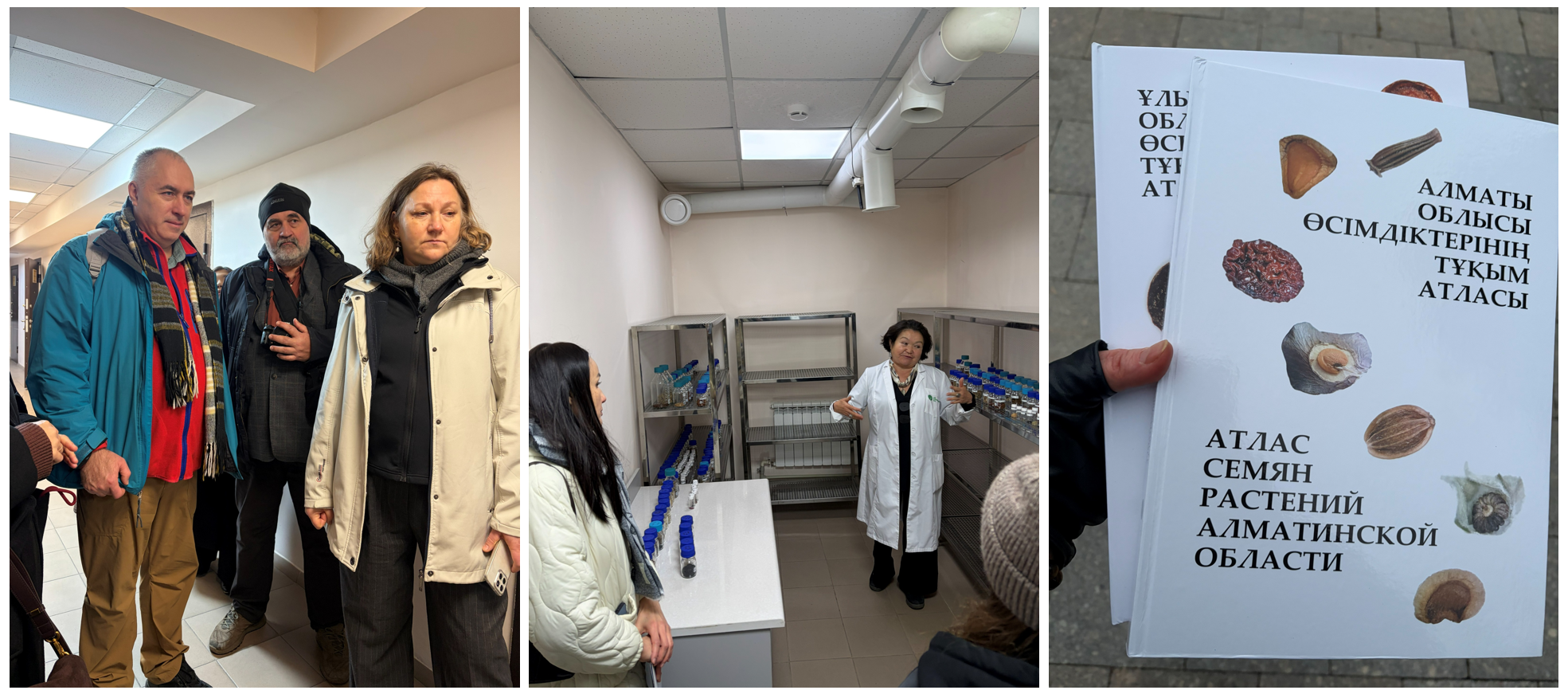
Nearly three hours passed almost unnoticed! Participants were able not only to see unique plant collections, but also to learn about the extensive scientific work behind their study and conservation.
We thank Svetlana Vyacheslavovna Nabieva, Tansara Shayakhmetovna Murzatayeva and the management of the Institute of Botany and Phytointroduction for the informative excursions, warm welcome and opportunity to discover the fascinating world of plants!
The excursions to the Main Botanical Garden were organized as part of the cultural program of the International Scientific Conference “Current State and Prospects for the Conservation of Biodiversity of the Western Tien Shan”, held at the Institute of Zoology on November 11–12, 2026.
The conference was dedicated to the 100th anniversary of the Aksu-Zhabagly Nature Reserve, the first nature reserve established in Kazakhstan and Central Asia. The Institute of Botany and Phytointroduction, together with the Aksu-Zhabagly Nature Reserve and the Kazakhstan National Committee for UNESCO’s Man and the Biosphere Programme (MAB), partnered with the Institute of Zoology of the Committee of Science of the Ministry of Science and Higher Education of the Republic of Kazakhstan in organizing and holding the conference.
Following the conference, a Conference Proceedings volume was prepared.
18.11.2026
Photo: Institute of Zoology of the Committee of Science of the Ministry of Science and Higher Education of the Republic of Kazakhstan