



Project leader: Eszhanov Aydyn Baurzhanovich
Implementation period: 2024–2026
IRN: BR BR24993060
ABOUT THE PROJECT:
The Western Tien Shan is included in the UNESCO World Network of Biosphere Reserves and the list of transboundary World Heritage natural sites. It is classified as a region of exceptionally high biological diversity in Central Asia.
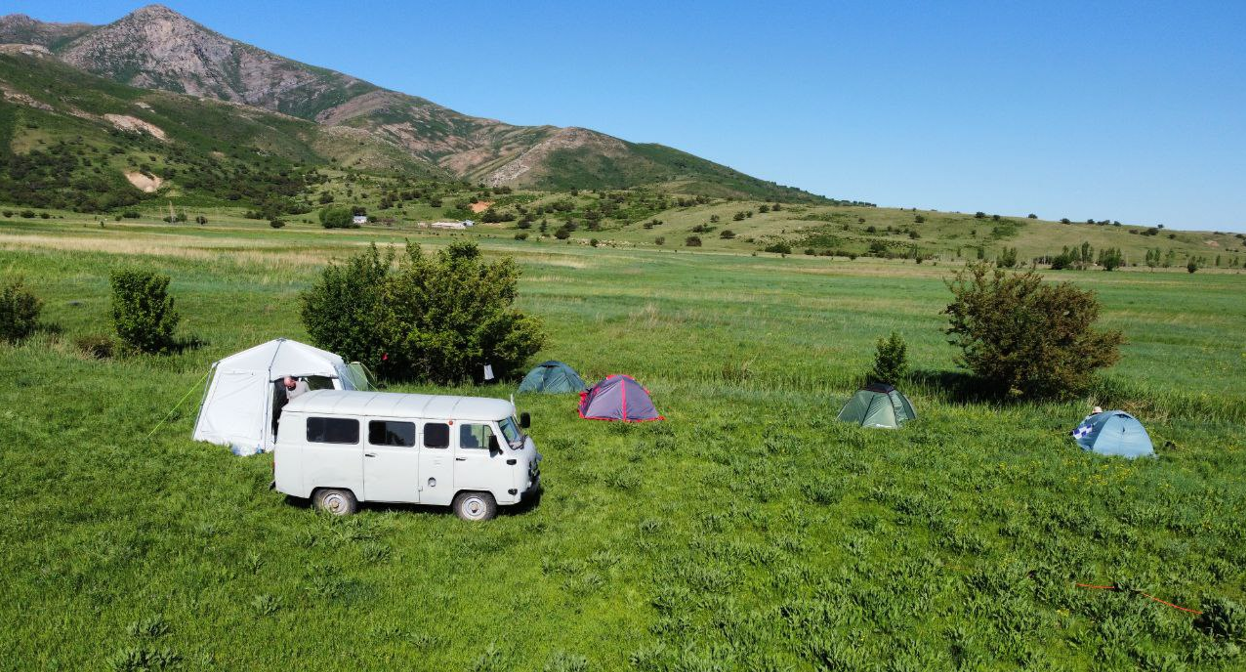
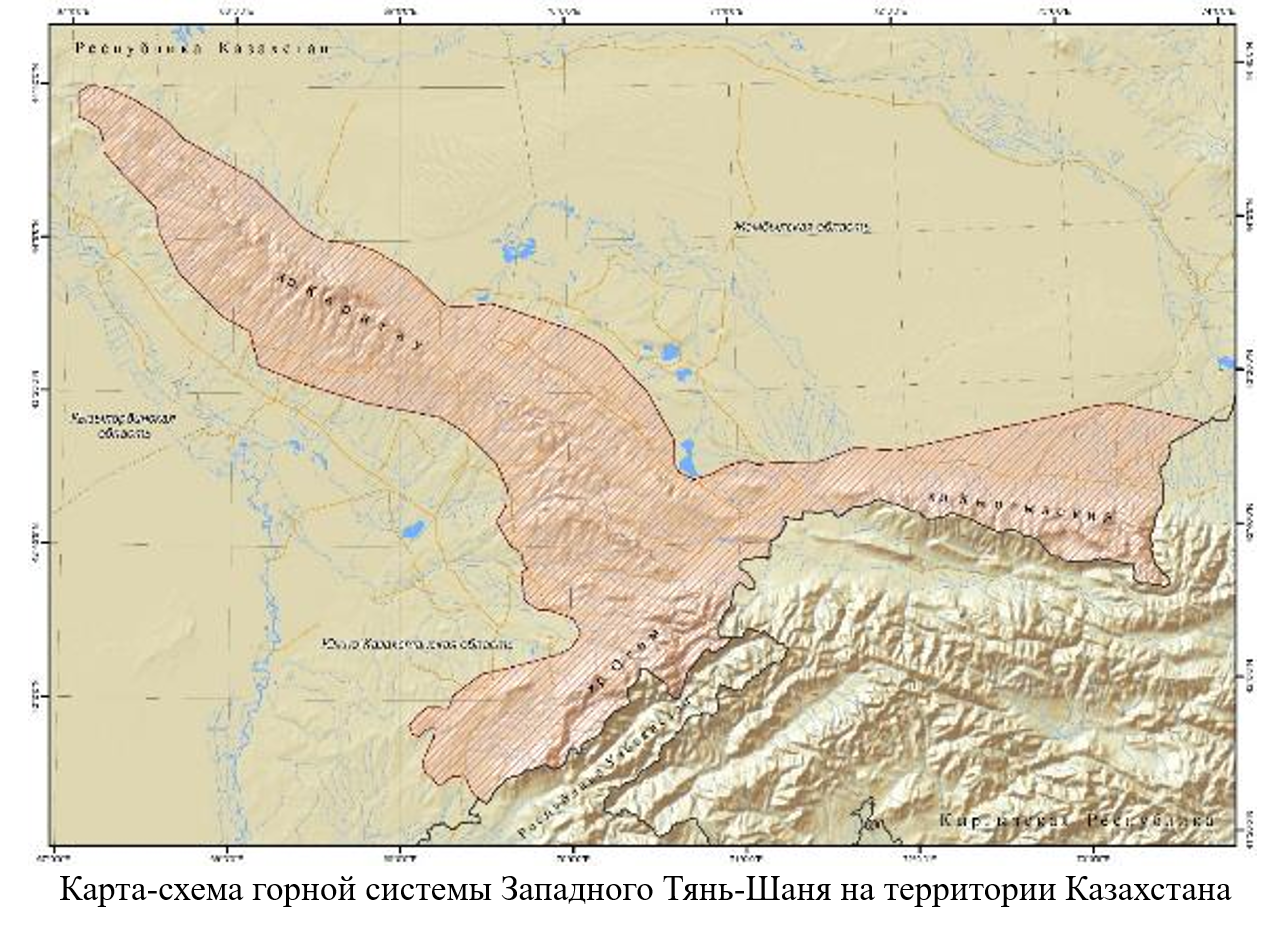
The mountain range is located within four neighboring countries: Kazakhstan (21%), Kyrgyzstan (68%), Uzbekistan (17%), and Tajikistan (4%). It plays a key role in maintaining the ecological balance of the region. In Kazakhstan, the Western Tien Shan occupies the territory of Zhambyl Region.
The Western Tien Shan mountain chain includes the Fergana, Talas, Chatkal, Kuramin, Karatau, and Korzhantau ranges. Its total length from northwest to southeast is about 815 km, and its maximum width in the central part reaches 350 km.
The foothill areas adjacent to the Western Tien Shan are among the most densely populated in the world, leading to intensive use of water resources, livestock grazing, and conversion of virgin lands and natural pastures into agricultural areas. These factors pose significant risks to the region’s unique biodiversity. This program aims to develop an information system for maintaining a cadastre of wild animals of the Western Tien Shan to ensure their conservation and sustainable use through the study of the current state of the region’s fauna.
RELEVANCE:
Zoological research in the Western Tien Shan began in the 1860s and continued into the 21st century. As a result of these studies, the first nature reserve in Central Asia — Aksu-Zhabagly — was established in 1926. In 1966, near its northern border, the Institute of Zoology of Kazakhstan opened the Shakpak Ornithological Station to study bird migration, which continues its work to this day.
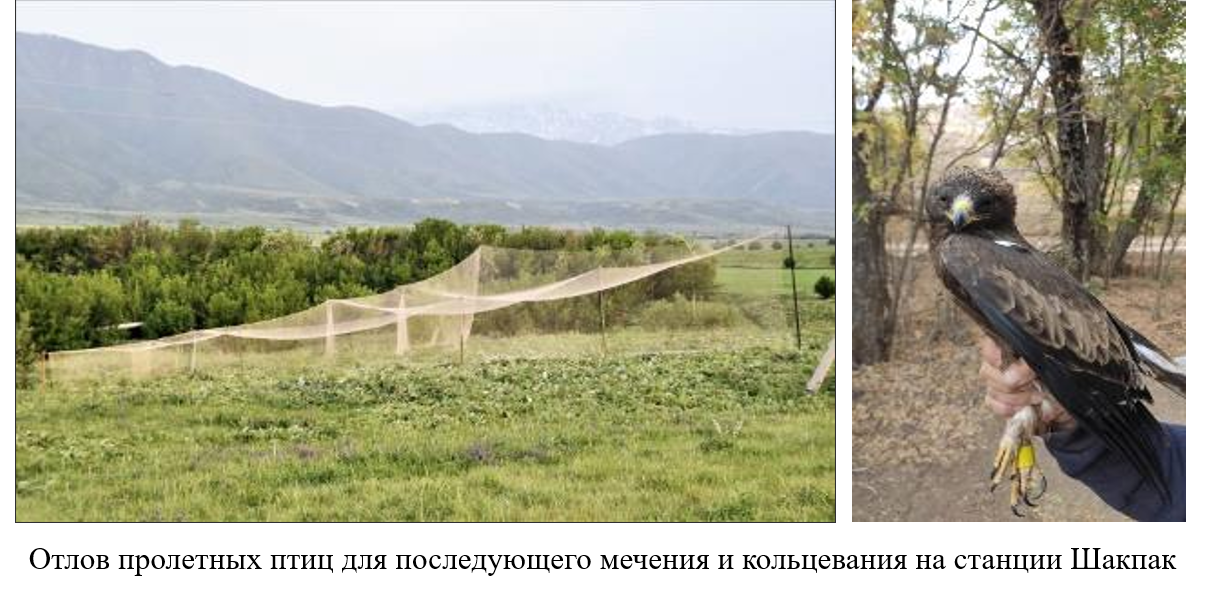
Earlier studies focused on separate animal groups and lacked an integrated approach. Over the past 20 years, comprehensive zoological research has hardly been conducted in the Kazakh part of the Western Tien Shan, except for bird migration studies at the Shakpak Pass. During this time, the fauna has undergone major changes under the influence of climate change and anthropogenic pressure, and previously published data have become outdated. Therefore, there is now an urgent need for monitoring studies and the creation of a scientifically grounded cadastre of the region’s fauna using modern research methods.
The project covers all major animal groups, both extant and extinct. As a result, previously fragmented materials will be consolidated and systematized into an electronic cadastre of the region’s fauna based on modern advances in taxonomy and zoological systematics.
This electronic cadastre of wild animals will be created for the Western Tien Shan for the first time and will serve as a model for neighboring countries. Reliable scientific data on the fauna of the Western Tien Shan region will be freely accessible to state agencies, universities, and non-governmental environmental organizations. The database will include a search engine for analyzing data on parasitofauna, fossil animals, hydrobionts, insects, arachnids, mollusks, fish, amphibians, reptiles, birds, and mammals.
PROGRAM GOAL – To develop an information system for maintaining the cadastre of wild animals of the Western Tien Shan aimed at their conservation and sustainable use.
PROGRAM OBJECTIVES:
1) To create an electronic database for the cadastre of the Western Tien Shan fauna, integrated with GIS and containing data on both recent and fossil animal species of the region;
2) To identify the current fauna, assess the condition of dominant, rare, and endemic animal populations, and analyze changes in fauna over the past 20 years;
3) To conduct a taxonomic assessment of the fossil fauna of the Western Tien Shan;
4) To evaluate the potential of economically important species of the modern fauna and the geological and stratigraphic significance of the fossil fauna;
5) To assess the current state of key economically significant animal species and forecast population dynamics for the next 20–50 years under various climate scenarios;
6) To develop a national monitoring system for economically and genetically valuable species of wild animals in the Western Tien Shan to ensure biodiversity conservation;
7) To identify current threats and propose specific measures for the conservation, reproduction, and sustainable use of wildlife resources in the Western Tien Shan;
8) To apply modern cryobiological technologies for preserving genetically valuable species for long-term conservation and potential restoration in natural ecosystems.
EXPECTED RESULTS:
1) An electronic database integrated with GIS will be created for maintaining the cadastre of the Western Tien Shan fauna, including data on extant and fossil species and a detailed ecosystem map of the region.
2) The modern fauna will be identified and an annotated list of at least 550 animal species will be compiled. Population statuses of at least 40 dominant, rare, and endemic species will be assessed, and the dynamics of fauna changes over the past 20 years will be analyzed.
3) A taxonomic evaluation of the fossil fauna will be carried out, and an annotated list of at least 50 extinct taxa will be prepared.
4) The economic potential of at least 30 important modern species will be assessed, as well as the role of fossil animals in geological mapping and stratigraphic correlation.
5) The current condition of at least 40 economically significant species will be evaluated, and forecasts of their population dynamics for the next 20–50 years will be developed considering climate change scenarios.
6) A state monitoring system will be developed for at least 15 economically and 15 genetically valuable species, with recommendations for implementation.
7) Modern threats will be identified, and specific measures for wildlife conservation and sustainable use will be proposed.
8) Advanced cryobiological technologies will be applied to preserve at least 20 genetically valuable species for long-term storage and possible reintroduction into natural ecosystems.
Additionally, for the authorized body for wildlife of the Republic of Kazakhstan and the regional hunting organizations (to be included in the action plans for rare and endangered animal species), documentation based on the electronic database “Cadastre of the Western Tien Shan Wildlife” and maps of specially protected natural areas will be developed.
As a result of the project, at least 9 articles will be published in peer-reviewed scientific journals indexed in the 1st–3rd quartiles of the Web of Science database and/or with a CiteScore percentile of 50 or higher in the Scopus database, as well as at least 10 articles in journals recommended by the Committee for Quality Assurance in Science and Higher Education, and at least one monograph. At least 5 intellectual property items (patents or copyright certificates) will be obtained.
PROJECT EXECUTORS:
The Western Tien Shan is classified by UNESCO as a region of exceptionally high biological diversity in Central Asia; therefore, successful completion of the program tasks and compilation of the cadastre require maximum coverage of the fauna of this mountain region. This necessitates the involvement of specialists from various scientific fields.
The program is implemented by 56 employees of the Institute of Zoology of the Republic of Kazakhstan, including 4 Doctors of Science, 12 Candidates of Science, 7 PhD holders, 19 Masters of Science, and 13 Bachelors. About half of the research team consists of young scientists under 40 years old.
Project leader – Eszhanov Aydyn Baurzhanovich, PhD, Head of the Laboratory of Arachnology and Other Invertebrates, Institute of Zoology. ORCID ID: 0000-0001-6572-5668 h-index 5
Responsible project executor – Chirikova Marina Aleksandrovna, PhD (Biol.), Deputy Director for Science, Institute of Zoology. ORCID ID: 0000-0002-0515-598X h-index 7
Responsible executors by project sections:
Krupa Elena Grigoryevna – Dr. Biol. Sci., Professor, Head of the Laboratory of Hydrobiology and Ecotoxicology. ORCID ID: 0000-0001-9401-0258 h-index 9
Suleimenov Maratbek Zhaksibekovich – Cand. Vet. Sci., Professor, Principal Researcher, Laboratory of Parasitology. ORCID ID: 0000-0002-6922-1421 h-index 4
Malakhov Dmitry Viktorovich – Head of the GIS and Remote Sensing Research Center. ORCID ID: 0000-0002-7844-6569 h-index 8
Kopylov Dmitry Sergeyevich – Cand. Biol. Sci., Acting Head of the Laboratory of Paleozoology. ORCID ID: 0000-0003-2013-544X h-index 15
Grachev Aleksey Aleksandrovich – Acting Head of the Laboratory of Theriology. ORCID ID: 0000-0001-6051-8299 h-index 3
Akentyeva Ekaterina Valeryevna – Junior Researcher, Laboratory of Ornithology and Herpetology. ORCID ID: 0009-0005-5831-4402 h-index 1
RESEARCH RESULTS:
Summary of 2024 results
The research object within the project area includes both recent and fossil animal species of the Western Tien Shan.
In 2024, work was planned and initiated under four main objectives:
1) To create an electronic database for the cadastre of the Western Tien Shan wildlife, integrated with GIS and containing data on recent and fossil wild animal species of the region.
As a result of the work performed, the development of an electronic database on the Western Tien Shan fauna was initiated, taking into account the shortcomings of previous databases created under earlier programs. The design of the data output page was completed, adaptation for extinct taxa and recent species was launched, the administrative panel was adjusted to improve field-based search and data import functions, and the layout of elements on the main page was optimized.
The process of populating the database has begun. The mollusk section was supplemented with 22 observation records, arachnids – 227 records across 60 species, reptiles – 12 records for 1 species, birds – 860 records for 5 species, and mammals – 475 records for 42 species.
Work on refining database modules and filling the electronic data bank will continue in 2025–2026.
2) To identify the modern fauna, assess the condition of populations of dominant, rare, and endemic animal species, and determine changes in the fauna of the Western Tien Shan over the past 20 years.
Through field expeditions, study of collection materials, and analysis of published faunistic data, it was established that the current fauna of the Western Tien Shan includes at least 1852 species, of which 1376 species (74.3%) are invertebrates. The largest groups were insects (Insecta) – 1013 species, hydrobionts (Hydrobiontes) – 170 species, arachnids (Arachnida) – 136 species, mollusks (Mollusca) – 50 species, and helminths (Helminthos) – 7 species.
Among vertebrates, 476 species were recorded, representing 25.7% of the total identified diversity: birds (Aves) – 387 species, mammals (Mammalia) – 54 species, fish (Pisces) – 31 species, reptiles (Reptilia) – 12 species, and amphibians (Amphibia) – 3 species.
Within the project, a set of indicators was selected to assess environmental dynamics: carbon content, evaporation, precipitation, gross primary productivity, snow and ice cover volume, soil moisture, vegetation cover, etc. These indicators will help reveal correlations with fauna dynamics and allow for predictions of future trends. In addition, existing data on the hydrochemical composition of several regional water bodies were analyzed to assess habitat conditions.
Work on identifying the current fauna and assessing population status will continue in 2025–2026.
3) To conduct a taxonomic assessment of the fossil fauna of the Western Tien Shan.
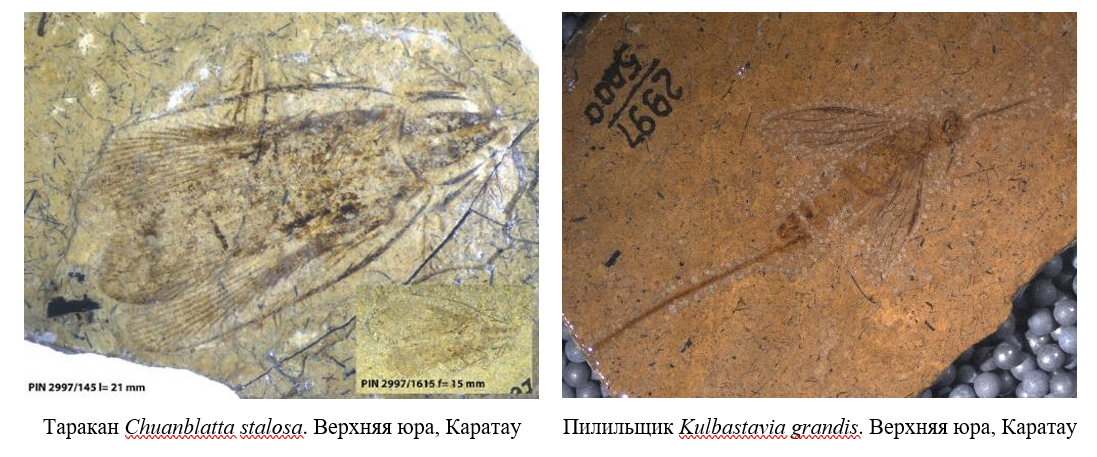
A taxonomic evaluation of the fossil fauna of the Western Tien Shan was carried out based on literature sources. The preliminary list of fossil species identified in the study area includes approximately 1400 species belonging to 75 orders: insects (Insecta) – 938 species, trilobites (Trilobita) – 303 species, brachiopods (Brachiopoda) – 51 species, about 50 other marine invertebrates, and 40 vertebrates (Vertebrata).
The faunal list currently identified is not final. Many groups remain poorly studied, and further research may lead to the description of new taxa. The main priorities for future studies are the localities of Karatau, Kzyl-Zhar, Tasgorsai, and Koshkurgan.
Taxonomic assessment of the fossil fauna will continue in 2025–2026.
4) To apply modern cryobiological technologies for the preservation of genetically valuable species of wild animals for long-term storage and possible restoration in natural ecosystems.
Due to the inability to collect samples for the cryobank during the reporting period, international experience in collecting materials for cryoconservation from various animal taxa was reviewed, and an extensive body of literature was analyzed on the preservation of somatic and germ cells in different animal groups. Work began on selecting the most effective methods to be applied and refined in the next research phase.
Implementation of modern cryobiological technologies for the preservation of valuable animal species will continue within the project in 2025–2026.
Main performance indicators include the accuracy of species identification and taxonomic composition. The established electronic database is used for maintaining the wildlife cadastre, conducting scientific research, and supporting biodiversity conservation measures. Scope of application – wildlife accounting and monitoring, conservation, and sustainable use of animal resources.
Summary of 2025 results
In 2025, work continued on identifying the modern fauna of the region and developing a database on the animal world of the Western Tien Shan. The fauna of the Western Tien Shan has been identified: recent – 1,863 species, fossil – 1,427 species.
As a result of fieldwork, processing of collection materials, and analysis of literature sources, the following data were obtained:
Hydrobionts. A total of 100 species of planktonic invertebrates were identified in the zooplankton of seven surveyed water bodies of the Western Tien Shan, including 63 rotifer species, 20 cladocerans, and 17 copepods. The lowest species richness was recorded in the zooplankton of the Badam Reservoir, while the highest values were observed in the Yntaly Reservoir and Lake Biylikol.
Mollusks. A revision and assessment of the species composition of mollusks of the Western Tien Shan were carried out. The mollusk fauna of the Western Tien Shan includes 50 species, 28 genera, 15 families, 2 orders, and 1 class. The regional fauna includes 11 endemic species belonging to the families Enidae (2), Bradybaenidae (1), Hygromiidae (1), Pupillidae (3), Lymnaeidae (2), Hydrobiidae (1), and Limacidae (1). The type and only known locality of the species endemic to the Western Tien Shan, Martensamnicola kazakhstanica Izzatullaev, Sitnikova & Starobogatov, 1985, in the vicinity of the village of Ryskulov was studied. During the work, samples were collected and identified, and tissues were taken for further molecular genetic analysis aimed at clarifying the endemic status and phylogenetic position of the species. A detailed study was also conducted of the genus Turcomilax Simroth, 1902 (Limacidae), which is endemic to the Tien Shan.
Insects. A total of 446 insect species were identified in the Western Tien Shan: 27 Orthoptera, 100 Hemiptera, 53 Cicadidae, 104 Coleoptera, 155 Lepidoptera, and 7 Hymenoptera species.
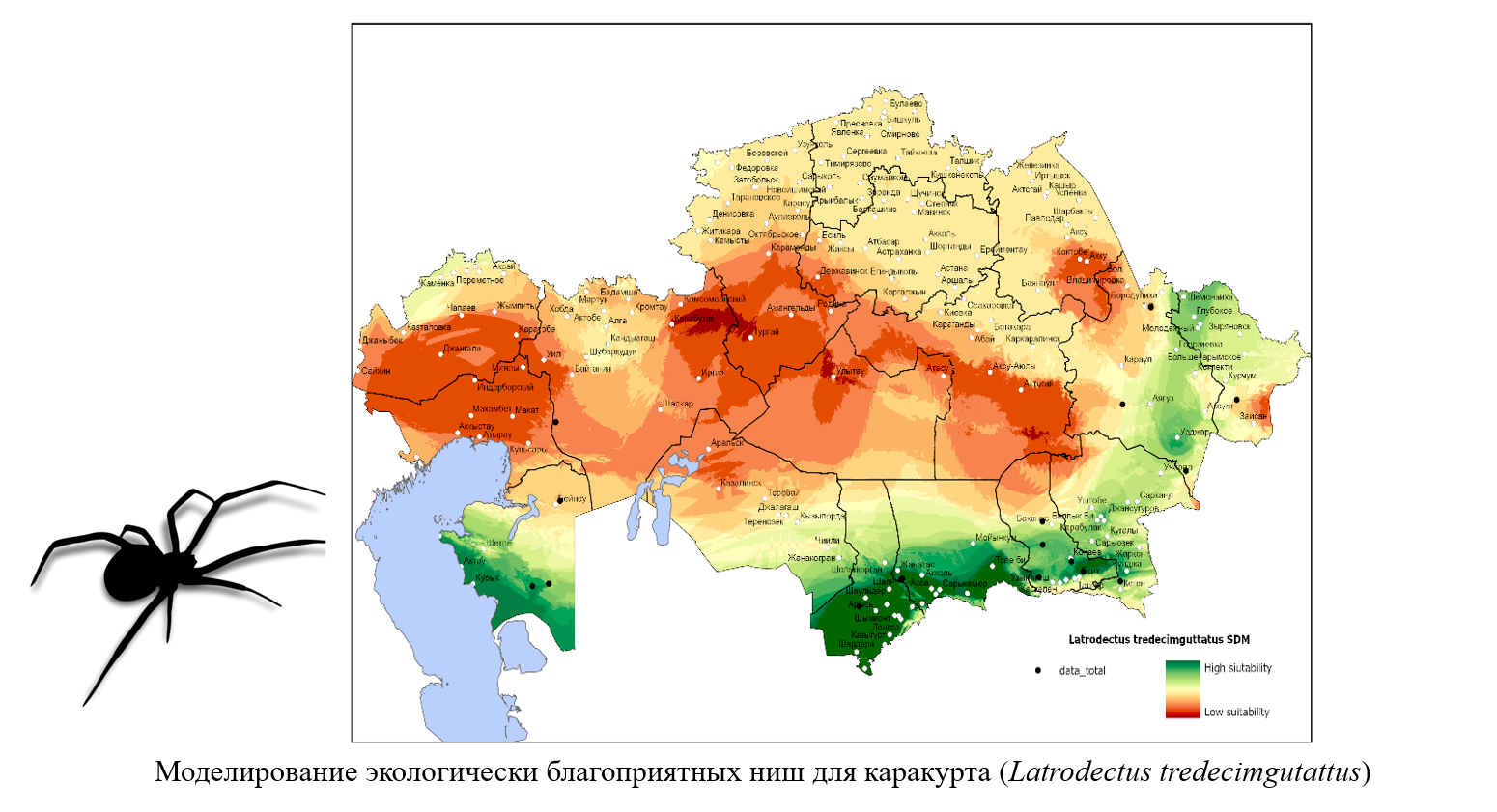
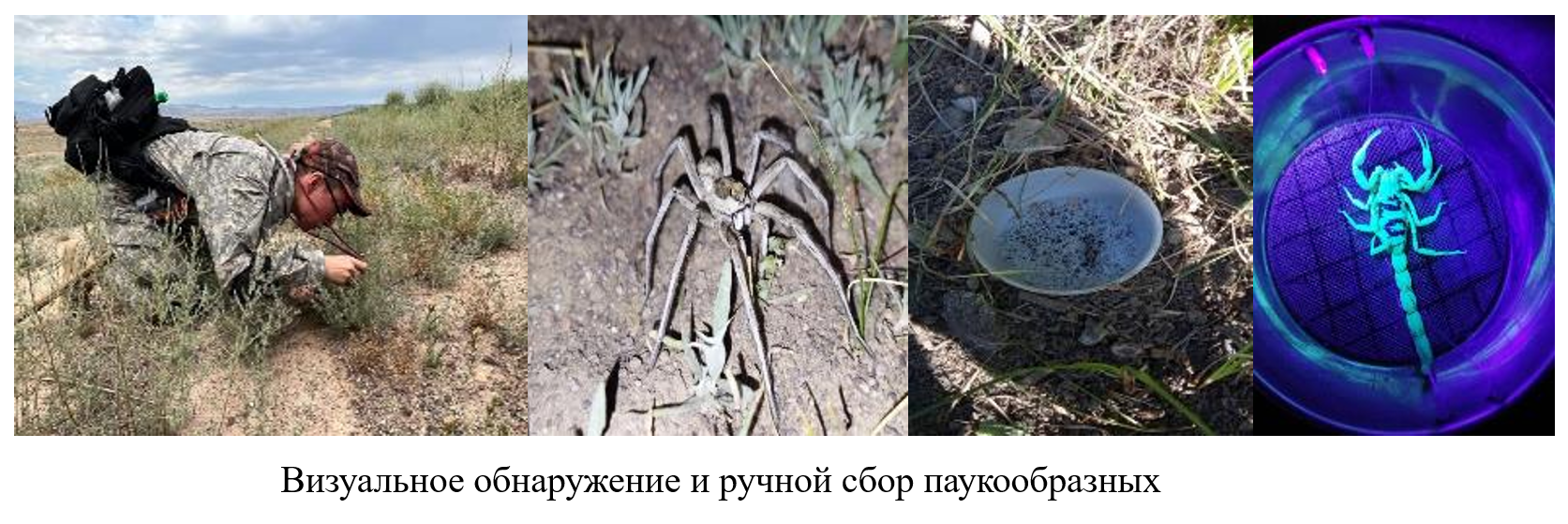
Arachnids. The araneofauna of the region includes at least 249 species belonging to 149 genera and 33 families. About half of them (150 species) are recorded in Kazakhstan, and 117 species are known only from its territory. Zoropsis kirghizicus and Gnaphosa ovchinnikovi, previously known only from Kyrgyzstan, are recorded for the first time in Kazakhstan, while Psammitis aff. tyshchenkoi probably represents a taxon new to science. The greatest species diversity is characteristic of the family Linyphiidae (54 species), followed by Gnaphosidae, Salticidae, Theridiidae, Thomisidae, and Lycosidae. Compared with other parts of the Western Tien Shan, the fauna of Kazakhstan is poorer in Linyphiidae but richer in representatives of Gnaphosidae, Lycosidae, and Salticidae, reflecting uneven levels of study across the region.
Amphibians and reptiles. The taxonomic composition of the regional herpetofauna was clarified; it is represented by 3 species of amphibians and 14 species of reptiles. Assessments were conducted on species listed in the Red Book of Kazakhstan. The widespread distribution of Bufotes pewzowii in the region was confirmed, and a new locality of Platyceps rhodorhachis was discovered. Quantitative counts of Pseudopus apodus were conducted at sites in the Borolday and Karatau ranges, demonstrating a favorable population status and identifying limiting factors. Population counts were also carried out for the common species Eremias arguta. Important climatic characteristics for this species were assessed using GIS modeling of its ecological niche. Material was collected to determine the subspecific affiliation of Eremias arguta. A retrospective analysis and quantitative survey of Testudo horsfieldii were conducted in the Arys massif adjacent to mountain regions; in 2025 the encounter rate was 5 individuals/km.
Birds. Studies of the recent ornithofauna of the Western Tien Shan revealed 387 bird species belonging to 17 orders. Of these, 115 species are breeding species, including 10 rare and endangered species listed in the Red Book of the Republic of Kazakhstan. The most numerous groups are Passeriformes (75 species), birds of prey (12 species), and Columbiformes (7 species).
Mammals. As a result of field and laboratory work, the database was updated and expanded for 54 mammal species belonging to six orders and nineteen families.
Field studies conducted in key areas of the Talas, Kyrgyz, and Karatau ranges confirmed the stability of populations of most dominant and economically important species. In recent years, a positive population trend has been observed for ungulates such as the Karatau argali (Ovis ammon nigrimontana), the Siberian ibex (Capra sibirica), and the wild boar (Sus scrofa), which is associated with the expansion of the network of protected natural areas and strengthened conservation measures.
At the same time, some rare and endemic species remain in a tense population state. In particular, the Tien Shan argali (Ovis ammon karelini), which occurs exclusively within the Aksu-Zhabagly Nature Reserve, shows signs of local isolation and limited migratory activity. This indicates the need to assess the genetic condition of the population and to develop programs to restore migration routes between habitat patches.
For the snow leopard (Panthera uncia), the Tien Shan brown bear (Ursus arctos isabellinus), and the Turkestan lynx (Lynx lynx isabellinus), stable presence was recorded in the Talas Alatau and Ugam ranges, confirming the persistence of stable groups of large predators within the main transboundary network of protected areas.
For rare mammal species listed in the Red Book of the Republic of Kazakhstan (2010) and inhabiting the territory of the Western Tien Shan, data were collected and analyzed on the population status of five species: the Tien Shan brown bear (Ursus arctos isabellinus), the Turkestan lynx (Lynx lynx isabellinus), the snow leopard (Panthera uncia), the Tien Shan argali (Ovis ammon karelini), and the Karatau argali (Ovis ammon nigrimontana).
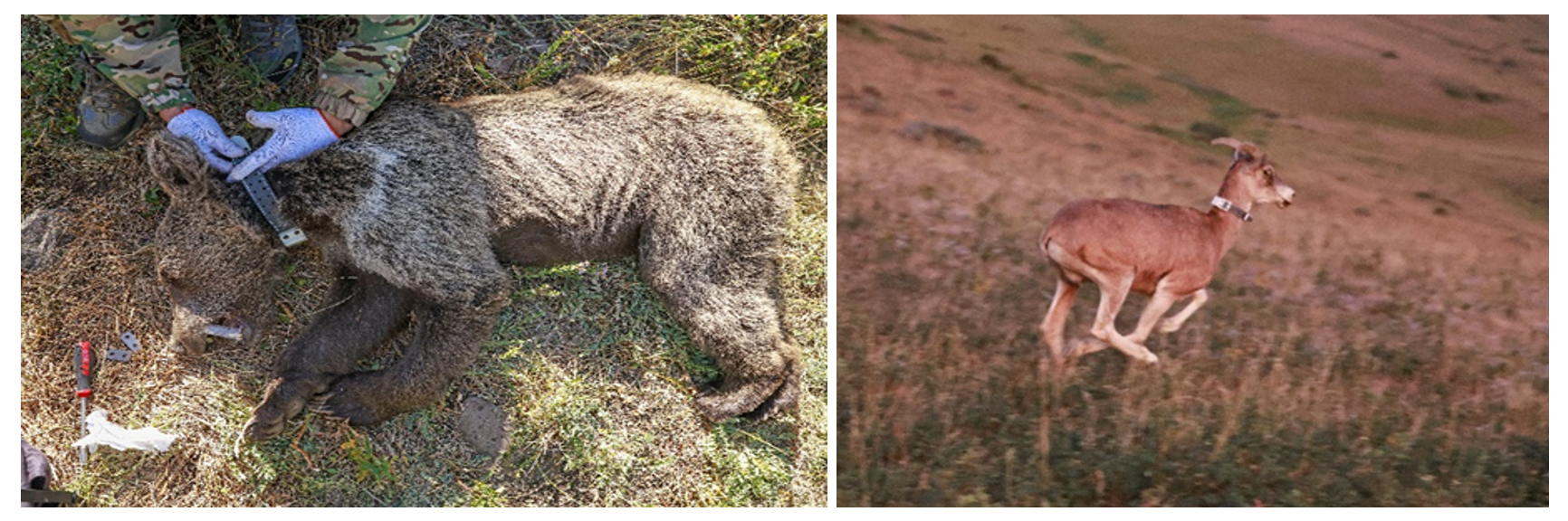
For the first time in Kazakhstan, satellite transmitters were successfully applied to the Tien Shan argali (Ovis ammon karelini) and the Tien Shan brown bear (Ursus arctos isabellinus), opening opportunities for long-term study of the spatial structure of their populations.
In total, 812 verified animal records containing spatial coordinates, information on abundance, habitat association, and conservation status were entered into the electronic database. The created database is integrated with a geographic information system, which will allow spatial analysis of species distribution and population dynamics in the future.
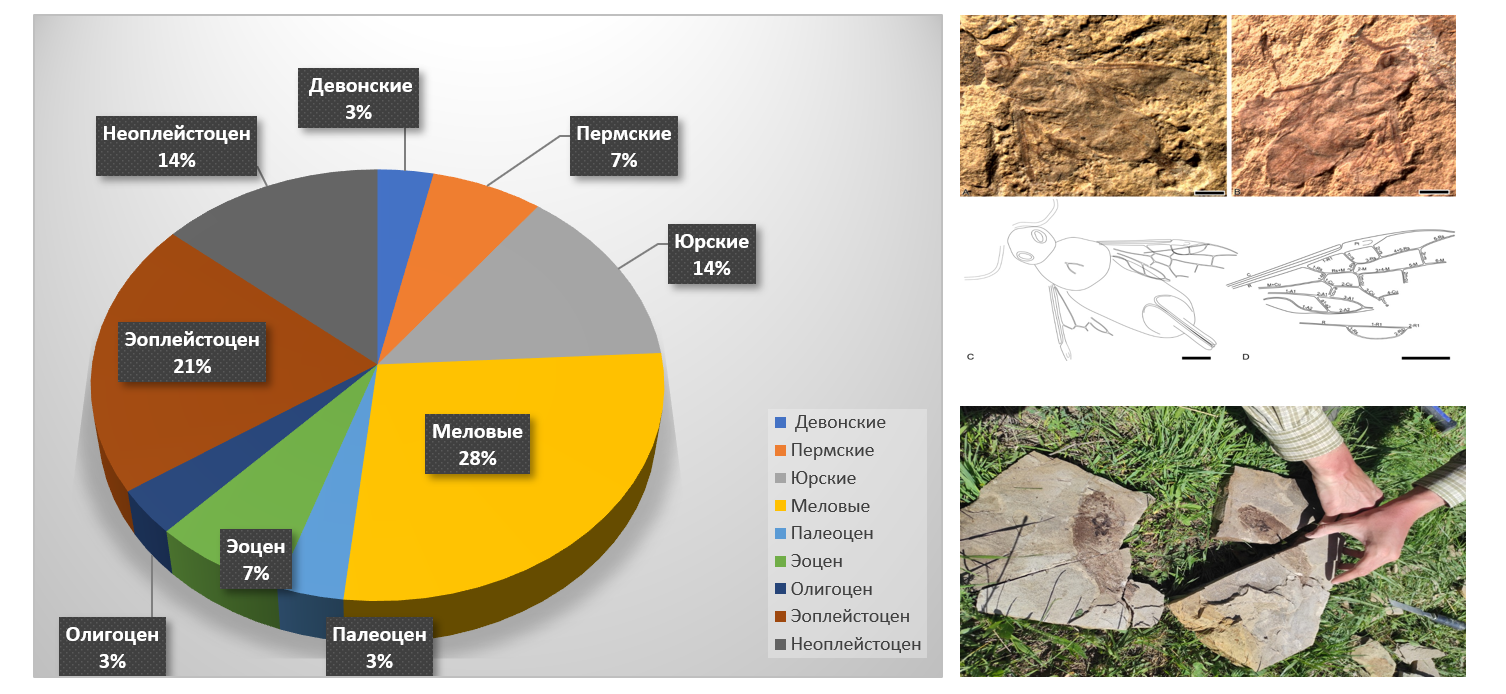
Fossils. The preliminary list of fossil fauna of the Western Tien Shan currently includes 1,387 species of invertebrates and 40 species of vertebrates. An expanded list of vertebrate taxa found in the study area contains 200 records (mainly taxa not identified to species level).
Hydrochemistry. The studies conducted provided modern data on the physical-geographical and hydrochemical characteristics of the main water bodies of the Western Tien Shan and allowed assessment of anthropogenic factors affecting their ecological condition. The surveyed water bodies (Sortur, Kulan, Badam, Teris-Ashchibulak, Yntaly, Tasotkel, and Biylikol) differ in morphometric parameters and hydrological features; however, most of them perform economic functions (irrigation, fisheries, and energy production).
Hydrochemical analysis showed that the water bodies are generally fresh or slightly brackish, with an alkaline reaction of the medium (pH 8.1–8.6) and sufficient dissolved oxygen, creating favorable conditions for hydrobionts. The water in most reservoirs is soft, whereas in Badam it is of medium hardness and in Biylikol it is hard. In terms of ionic composition, carbonate and sulfate waters of the magnesium type predominate. The content of nitrites, nitrates, and phosphates in the studied samples does not exceed the maximum permissible concentrations for fishery water bodies, indicating the absence of significant anthropogenic eutrophication. The highest levels of organic matter and nitrates were recorded in the Badam and Teris-Ashchibulak water bodies. In all reservoirs, exceedances of the maximum permissible concentrations for iron were detected, and in most also for manganese, which may be a consequence of the natural geochemical background of the Karatau mountain rocks and/or the influence of mining enterprises.
Overall, the current state of the aquatic ecosystems of the region can be considered satisfactory; however, high technogenic pressure, intensification of mineral extraction, and hydrotechnical construction pose potential threats to hydrobionts and biological diversity. Continuous environmental monitoring is required, including control of hydrochemical indicators and assessment of the impact of economic activities on water bodies.
Geoinformation analysis. A geoinformation analysis of the spatio-temporal dynamics of natural components in the Western Tien Shan and adjacent regions revealed a number of persistent ecological and climatic trends. Results of remote sensing and climatic observations for the period 1950–2024 indicate gradual climate warming, expressed as an increase in the mean annual air temperature by 0.8–1.0 °C. Against the background of rising temperatures, an increase in evapotranspiration has been observed, reflecting higher evaporation and increasing moisture deficit in ecosystems.
Precipitation and relative humidity did not show significant trends during the considered period; however, a steady decrease in the duration of snow cover has been observed, indicating overall warming of the winter season and changes in the hydrological regime of mountainous territories. Of particular concern is the reduction of glacier area in the Aksu-Zhabagly Nature Reserve by more than two times over the past three decades, confirming accelerated melting of mountain glaciers and a reduction in freshwater reserves in the region.
Changes in land-use structure show a moderate reduction of arable land in the Zhambyl and Turkestan regions compared with the Soviet period. Current agricultural land areas do not yet exert a critical impact on biodiversity; however, further expansion of agrocenoses under conditions of climatic stress may intensify degradation processes.
In general, the identified trends indicate increasing climatic pressure on the ecosystems of the region, manifested in vegetation degradation, glacier retreat, and changes in the water balance. These processes require comprehensive monitoring and adaptive measures aimed at conserving natural complexes and maintaining the resilience of ecosystems of the Western Tien Shan.
Among anthropogenic factors, the most significant impacts are:
- burning of dry vegetation, leading to degradation of habitats of amphibians and reptiles;
- mining activities (phosphorites, uranium, polymetals), accompanied by waste dumps, pollution, and landscape disturbance;
- the planned construction of a cascade of hydroelectric power plants on the Ugam River, which poses a risk of altering the hydrological regime and destroying natural ecosystems protected by international conventions.
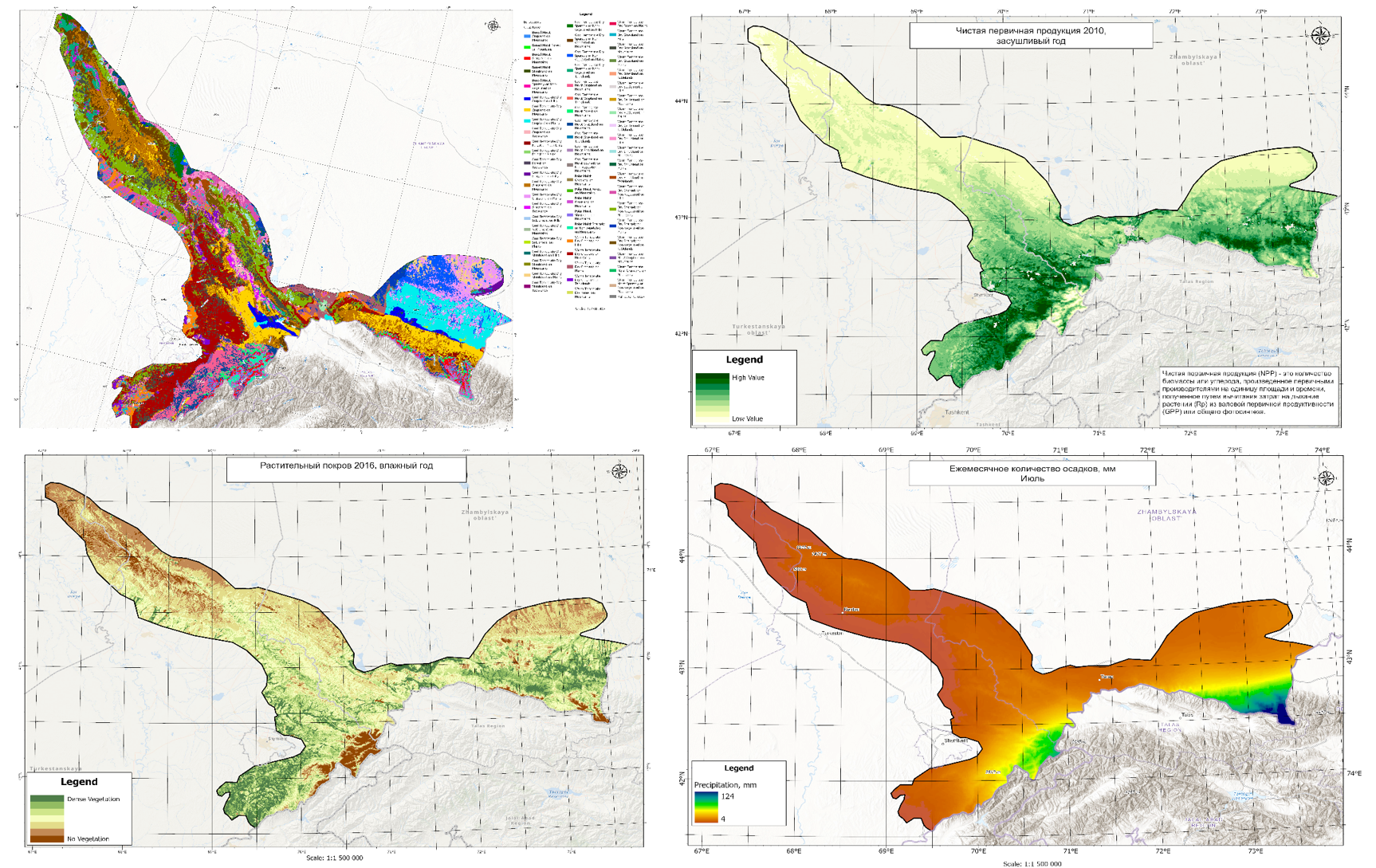
A total of 19 maps were prepared: ecosystem maps, vegetation cover maps, maps of carbon assimilation by vegetation, and maps of average monthly precipitation.
Cryoconservation. As a result of the work carried out, biopsies were obtained from 70 individuals belonging to 15 species of birds, 7 species of mammals, 3 species of reptiles, and 3 species of invertebrates. Fibroblasts were obtained, isolated, and cryopreserved from Hemiechinus auritus, Sus scrofa, Capreolus pygargus, Ursus arctos isabellinus, Meriones lybicus, as well as from the invertebrates Lycosa singoriensis, Karakumosa sp., and Mesobuthus thersites.
For the first time in Kazakhstan, cells from Mesobuthus thersites were successfully isolated and cultured, opening broad opportunities for the development of this research direction aimed at conserving rare and endangered invertebrate species in Kazakhstan. Since biopsies from wild animals are often taken outside laboratory conditions, the procedure is associated with a high risk of contamination. As a result, about 60% of all obtained cultures had to be discarded. Fibroblasts could not be obtained from bird biopsies, indicating the need to develop a different methodology for this group of animals. Work in this direction will continue.
In 2025, the following were published: 6 articles in ranked journals (Q1–Q3) included in the Web of Science and Scopus databases, 6 articles in journals included in the KOKNVO list, 4 articles in the proceedings of international conferences, and 3 patents.
LIST OF PUBLICATIONS:
Kopylov D.S., Rasnitsyn A.P. Anaxyelidae of Karatau: 100 Years After // Insects. – 2025. – Vol. 16, № 9. – P. 943. http://doi.org//10.3390/insects16090943. (Scopus 88%)
Shapovalov A.M. Notes on distribution of Thanatophilus porrectus (A.P. Semenov, 1891) (Coleoptera: Staphylinidae: Silphinae) // Ecologica Montenegrina (Biotaxa). – 2025. – Vol. 82 – P. 137–142 https://dx.doi.org/10.37828/em.2025.82.9 (Scopus 53%)
Ozerski P. V. Lily bush-cricket Tylopsis lilifolia (Orthoptera, Tettigoniidae) color forms eco-geographical distribution analysis (peculiarities identified through Internet resources analysis) // Ecologica Montenegrina. – 2025. – Vol. 88. – P. 222–243. http://doi.org /10.37828/em.2025.88.16. (Scopus 53%)
Titov S.V., Volynkin A.V., Salimuly M., Rakhimov R.D. Three species and one subspecies of owlet moths from the West Tian Shan Mountains new for the fauna of Kazakhstan (Lepidoptera, Noctuidae) // Ecologica Montenegrina. – 2025. – Vol. 91. – P. 9–16. https://doi.org/10.37828/em.2025.91.24 (Scopus 53%)
Ishayeva A., Nekhaev I. O. New findings of the endangered slug Turcomilax turkestanus (Simroth, 1898) (Heterobranchia: Eupulmonata: Limacidae) in the Northern Tien-Shan // Folia Malacologica. – 2025. – 33(3). – Р. 169–173. https://doi.org/10.12657/folmal.033.014 (Scopus 19%)
Tashimova A.E., Gavrilov A.E., Akentyeva Ye.V., Chalikova E.S., Zaripova S.Kh., Kobegenova S.S., Berdikulov B.T. Migratory connections of Coraciiformes of Kazakhstan revealed by bird ringing (1966–2025) // Biodiversitas. – Vol. 26. – №9 – 2025. – P.4706–4713 https://doi.org/10.13057/biodiv/d260941 (Scopus 70%)
Романова С., Серикова, А., Махмутова Р., Крупа Е. Изменение ионно-солевого состава воды реки Шу (казахстанская часть) в многолетнем цикле // Eurasian Journal of Ecology. – 2025. – 84(3). – С. 4–16. https://doi.org/10.26577/EJE20258431 КОКСНВО
Жүсіпбекова Н.М., Жантелиева Л.О., Беркінбай О., Сулейменов М.Ж., Омаров Б.Б., Баймуханбетов Е.Б. Батыс Тянь-Шань таутекелерінің паразиттері // Ғылым және білім, Журнал ЗКАТУ имени Жангирхана, 2025. – Ветеринария ғылымдары. – № 3-1 (80). – 307–314 беттер. https://doi.org/10.52578/2305-9397-2025-3-1307-314. КОКСНВО
Chalikova E., Berdikulov B., Tashimova A. Shifts in avian community structure in one of the gorges of the Aksu-Zhabagyly nature reserve // Eurasian Journal of Ecology. – 2025. – 84(3). – P. 149–158. https://doi.org/10.26577/EJE202584314 КОКСНВО
Беркінбай О., Омаров Б.Б., Қыстаубаева А.М. Қаратау арқарларының (Ovis ammon nigrimontana Severtzev, 1873) тоғышарлары // Қазақстан зоология хабаршысы. — 2025. – Том 6. – № 1. – Б. 40-47.
Беркинбай О., Сулейменов М.Ж. Баймуханбетов Е. Эндопаразиты козерогов Западного Тянь-Шаня // Международный научно-практический журнал «Endless light in science», № 8. – 31 августа 2025. – Астана, Казахстан, 2024. – С. 11–14. http://doi.org/1075281/zenodo.17090153
Беркінбай О., Омаров Б.Б., Үкібаева Л.О. Кекіліктердің (Alector chukar (Gray, 1830) тоғышарлар фаунасы // XIII International scientific-practical conference «Science and Technologies», 31 July. – Astana, Kazakhstan, ОФ «Международный научно-исследовательский центр «Endless Light in Science», 2025. – Р. 14–18. https://doi.org/10.5281/zenodo.16875903
Есенбекова П. А. Клопы (Heteroptera) Сайрам-Угамского государственного национального природного парка // Современные исследования. Прикладной аспект. Материалы международной научно-практической конференции (г. Москва, 10 сентября 2025 г.). / отв. ред. Д.Р. Хисматуллин. – Москва: Научно-образовательный портал «ГЕНЕЗИС», 2025. – C. 81–90. https://doi.org/0.34660/INF.2025.92.16.095
Иващенко А. А., Чаликова Е. С. Тюльпан Королькова (Tulipa korolkowii Regel) в Казахстане: распространение, морфология и состояние популяций // Проблемы ботаники Южной Сибири и Монголии. – 2025. – Т. 24, № 1. – С. 85–91. https://doi.org/10.14258/pbssm.2025018
Patents
Сулейменов М.Ж., Укибаева Л.О., Беркинбай О., Омаров Б. Б., Баймуханбетов Е.Б. // Патент на полезную модель № 11140. Способ выделения яиц гельминтов из фекалий диких млекопитающих животных и птиц флотационным методом; Заявитель и патентообладатель Институт зоологии. 12.09. 2025 г., заявл.2025/1088.2.
Каримова Д.Б., Рахимов Р. Д., Исенгалиев Н. М., Колов С. В. Патент на полезную модель № 10122 «Установка замкнутого водоснабжения для выращивания кормовых растений в производстве биоагентов». 24.01.2025