



Researchers from the Laboratory of Ornithology of the Institute of Zoology of the Republic of Kazakhstan, together with specialists from the Alakol State Nature Reserve, conducted field studies of Dalmatian and great white pelicans in the Mynkol lake system.
The studies were conducted on August 7, 2026, under a research agreement between the Institute of Zoology and the Alakol State Nature Reserve. The Mynkol lake system is one of the important breeding sites for these large waterbirds.
During the fieldwork, specialists individually marked the birds and fitted them with satellite GPS trackers. In total:
- 25 Dalmatian pelicans were ringed;
- 25 great white pelicans were ringed;
- GPS trackers were fitted to 5 Dalmatian pelicans.
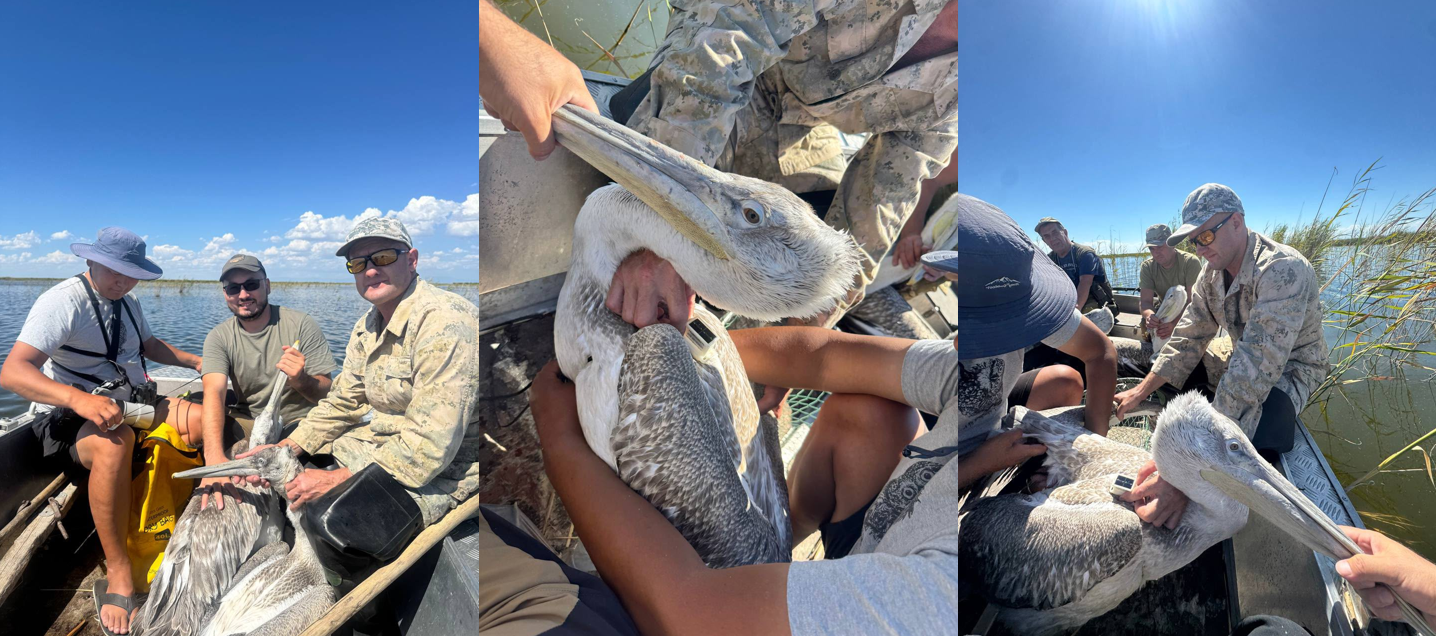
The use of GPS technology makes it possible to collect data on bird movements throughout the year and track their migration routes. The main objective of the study is to identify the pelicans’ summer feeding and wintering areas, determine the directions of their seasonal movements, and identify areas of key importance for the conservation of these species.
From Alakol to the wintering grounds
Long-term records of ringed birds show that the avifauna of the Alakol Basin is connected with vast areas of Central and South Asia, as well as Eastern Europe.
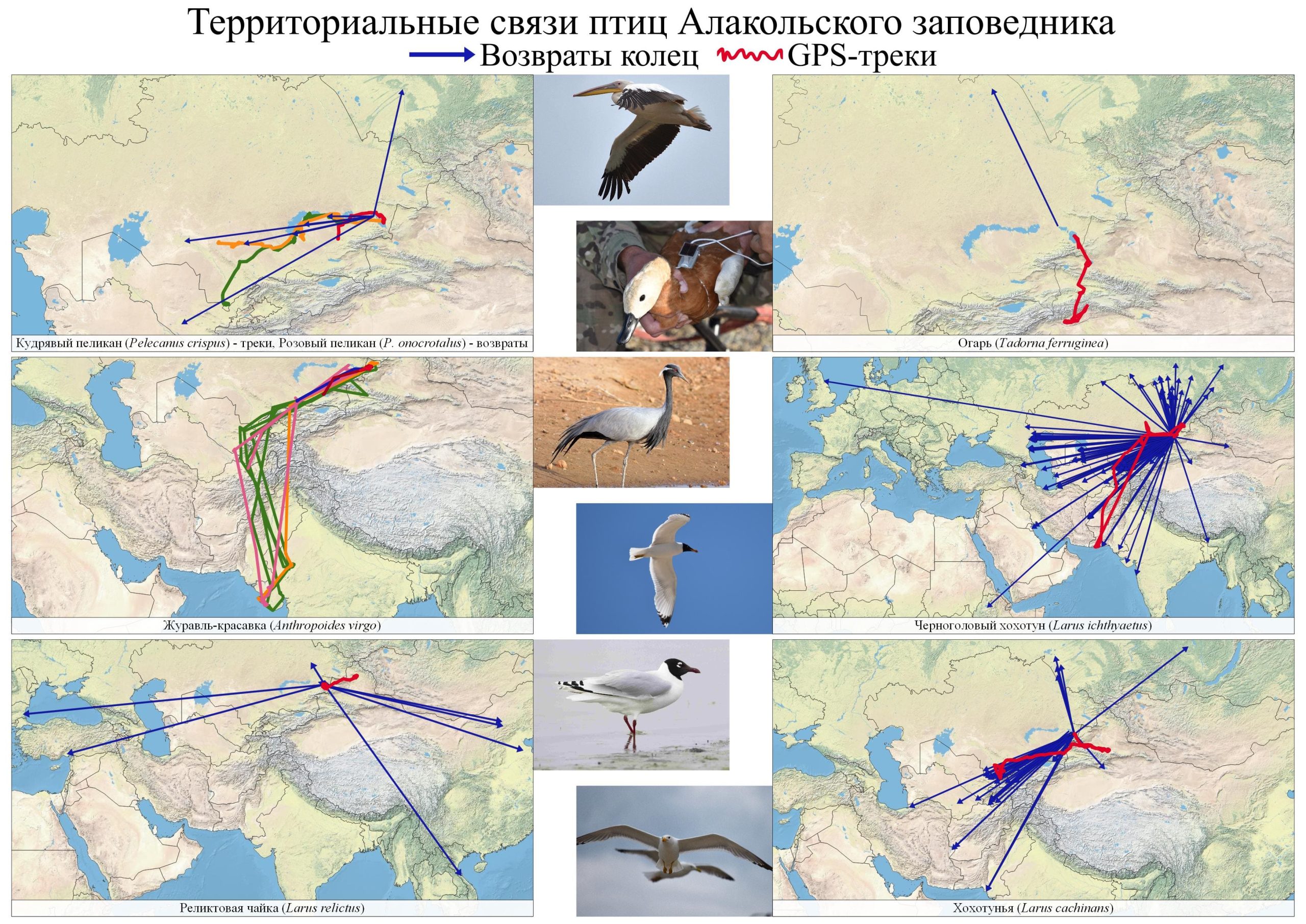
Among the countries where birds marked at Lake Alakol have most frequently been recorded are Uzbekistan (29.7%), Russia (21.7%), Iran (11.3%), India (9.7%), Tajikistan (5.3%), Turkmenistan (4.7%), Pakistan (3.7%), Kyrgyzstan (3.3%), and China (3.3%). Individual records have also been reported from Azerbaijan, Vietnam, Kuwait, Mongolia, Belgium, Bulgaria, Belarus, Ethiopia, Malaysia, Cambodia, the Netherlands, Oman, Sudan, Turkey, and the United Kingdom.
These data demonstrate the remarkable extent of the migratory connections of birds inhabiting the Alakol Basin. At present, however, information on geographical connections has been obtained for only about one-fifth of the region’s avifauna, highlighting the need to continue systematic bird ringing and monitoring.
The information obtained through these joint studies will supplement existing data on pelican habitats, feeding areas, and seasonal migration routes, as well as help identify the areas most important for their conservation.
The modern combination of traditional bird ringing and satellite GPS monitoring provides a basis for long-term studies of the spatial connections of birds and assessment of their population status. The results of such studies are important for developing scientifically sound measures for the conservation of rare and vulnerable waterbird species and their habitats.
The Institute of Zoology of the Republic of Kazakhstan expresses its gratitude to the staff of the Alakol State Nature Reserve for their cooperation and joint efforts in studying and conserving the avifauna of Kazakhstan.
Photos: staff of the Alakol State Nature Reserve; GPS tracking maps: A.E. Gavrilov (Head of the Bird Ringing Centre, Institute of Zoology of the Republic of Kazakhstan)
Original source of information: website of the Alakol State Nature Reserve