



On September 24, the premiere of the Kazakhstani documentary “SAVE THE TORTOISE”, dedicated to the work of the TASBAQA Nature Conservation Foundation to conserve the Central Asian tortoise and its habitat, was held at SmArt Space in Almaty.
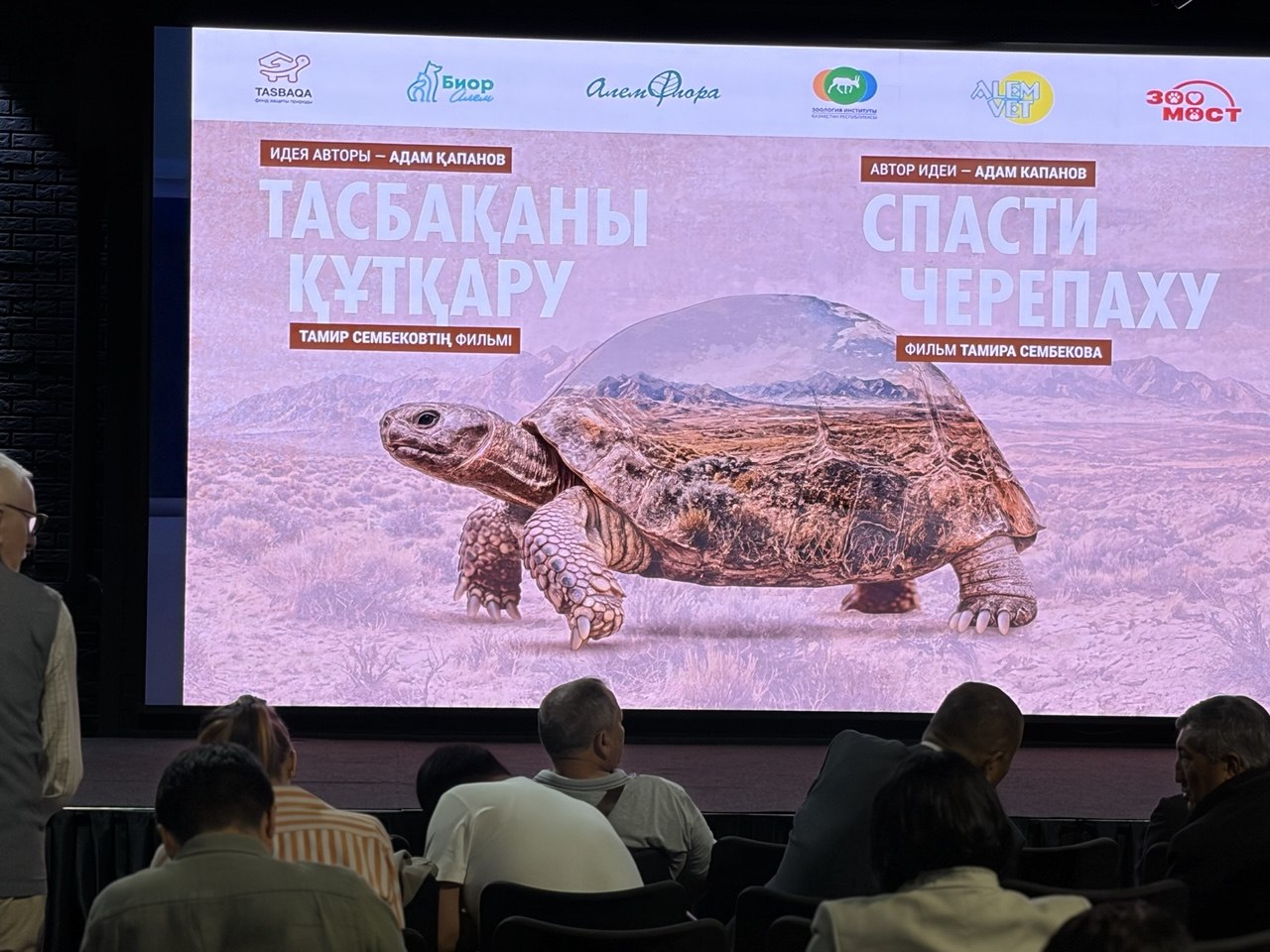
The first audience included representatives of the environmental community from Almaty, Astana and Shymkent, project partners and invited guests, all those who care about the future of Kazakhstan’s wildlife.
The idea for the film belongs to Adam Kapanov, Candidate of Biological Sciences, writer and journalist. His introduction to the work of the TASBAQA Foundation became the starting point for the project. The film was directed by Tamir Sembekov and produced by Alfiya Kapanova.
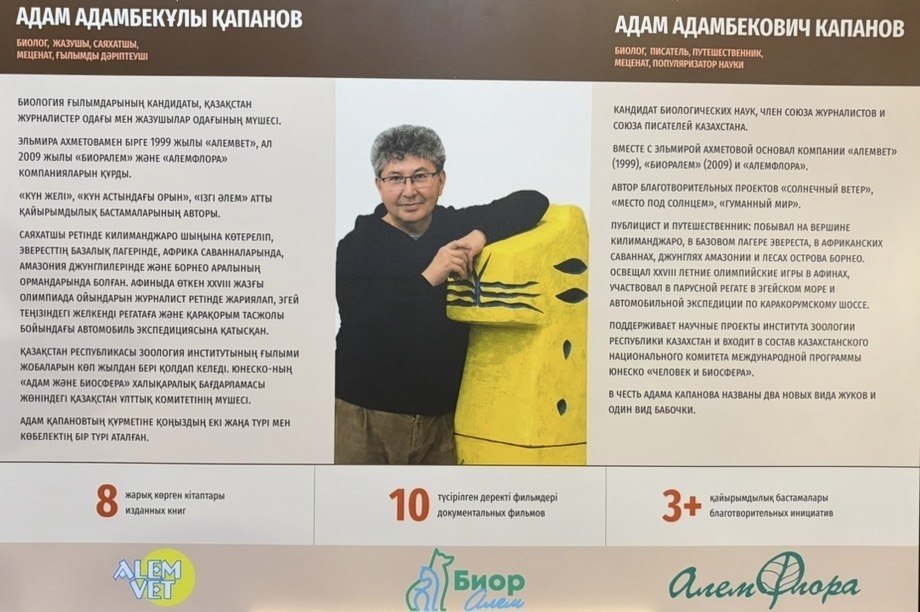
The film was created as part of the new media project “ZooMost”. It was produced by AlemFlora, with support from AlemVet and BiorAlem.
The Institute of Zoology of the Committee of Science of the Ministry of Science and Higher Education of the Republic of Kazakhstan served as the scientific consultant for the film.
Before the screening, the audience was addressed by the film’s producer, the originator of the idea, the director, and one of the film’s participants, Gani Nazarbek, a well-known Kazakhstani ecologist, environmental activist and wildlife photographer.
Yulia Zaugg, founder of the TASBAQA Foundation, is currently in Cambodia and therefore recorded a video message for the audience, in which she noted:
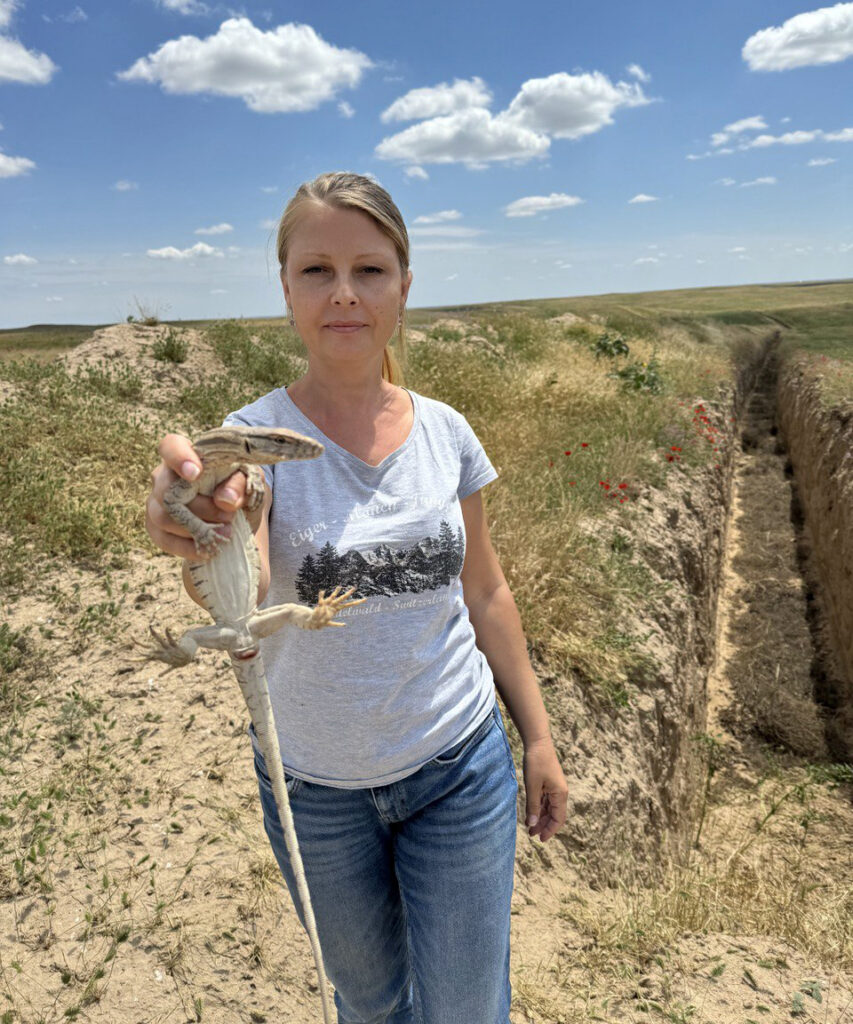
“‘Save the Tortoise’ is highly symbolic because TASBAQA’s work began with rescuing individual animals. But we soon realized that if we truly want to conserve the Central Asian tortoise in Kazakhstan, rescuing individual tortoises is not enough. We need to study tortoise populations and conserve their habitats. We need to eliminate the threats that cause tortoises to die. We need to change people’s attitudes towards tortoises and find solutions together with those on whom these decisions depend.
It is impossible to conserve the tortoise if the next generation does not know about this species and does not understand why it needs to be protected.
This film is not just about the TASBAQA Foundation. It is about much more. It shows what can be achieved when we join forces, when government agencies, scientists, conservation and public organizations, teachers and students do not act separately but work together towards a common goal. I sincerely thank each of you for your trust and for supporting us not only in words, but through your actions.
Thank you for everything we have already accomplished together and for everything we have yet to achieve!”
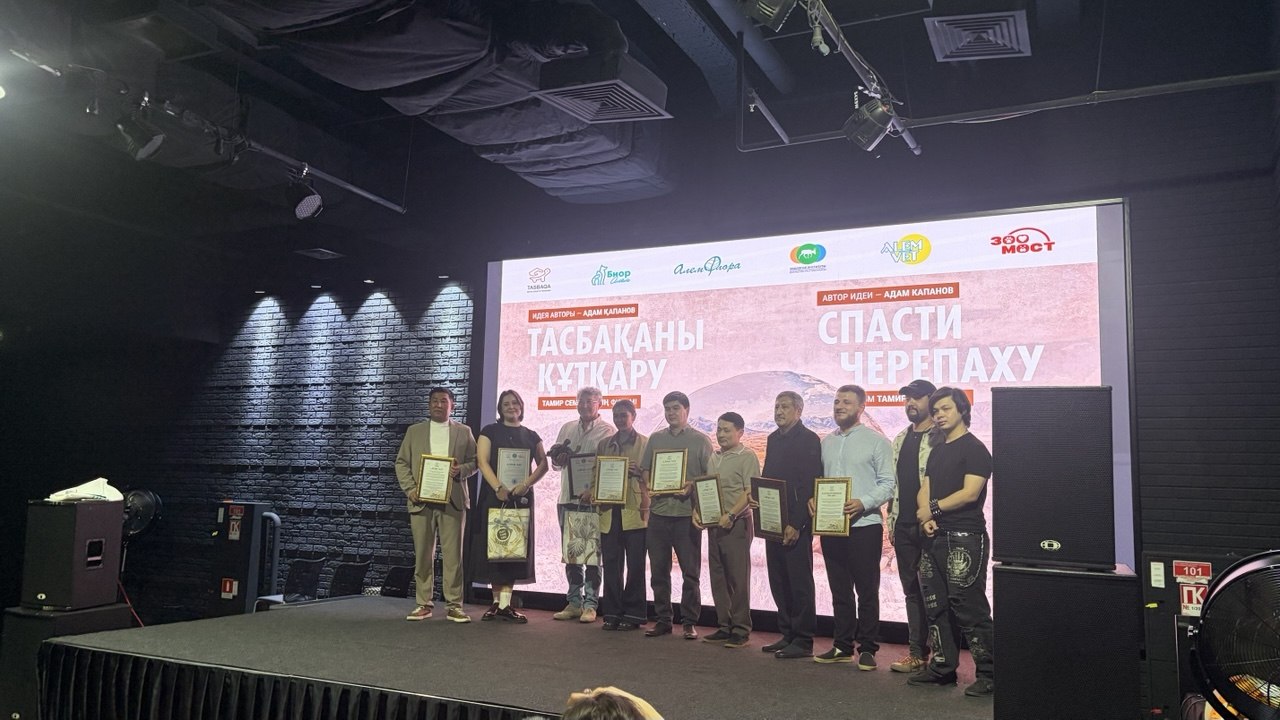
After the screening, the filmmakers presented certificates of appreciation and commemorative gifts to the partners and active participants in the film. This was followed by a question-and-answer session and a discussion of the film with its first audience.
Since October 1, 2026, the documentary “SAVE THE TORTOISE” has been available to watch on the YouTube channel of the “ZooMost” media project.
In addition, the team plans to present the film at national and international film festivals, including documentary and environmental film festivals, to raise awareness of Central Asian tortoise conservation beyond Kazakhstan.

A story about a species and the people working to save it
The Central Asian tortoise (Testudo horsfieldii) is a characteristic inhabitant of the steppe and desert landscapes of Central Asia. This species plays an important role in natural ecosystems and forms part of Kazakhstan’s unique biodiversity.
At the same time, the survival of these tortoises directly depends on the condition and preservation of their habitats. Land development, changes to natural landscapes and other forms of human impact can reduce the areas available to the species and pose threats to its populations.
These are the issues addressed by the film “SAVE THE TORTOISE”. At the heart of the film is the work of people who rescue animals directly in areas where their survival is threatened by human economic activities.
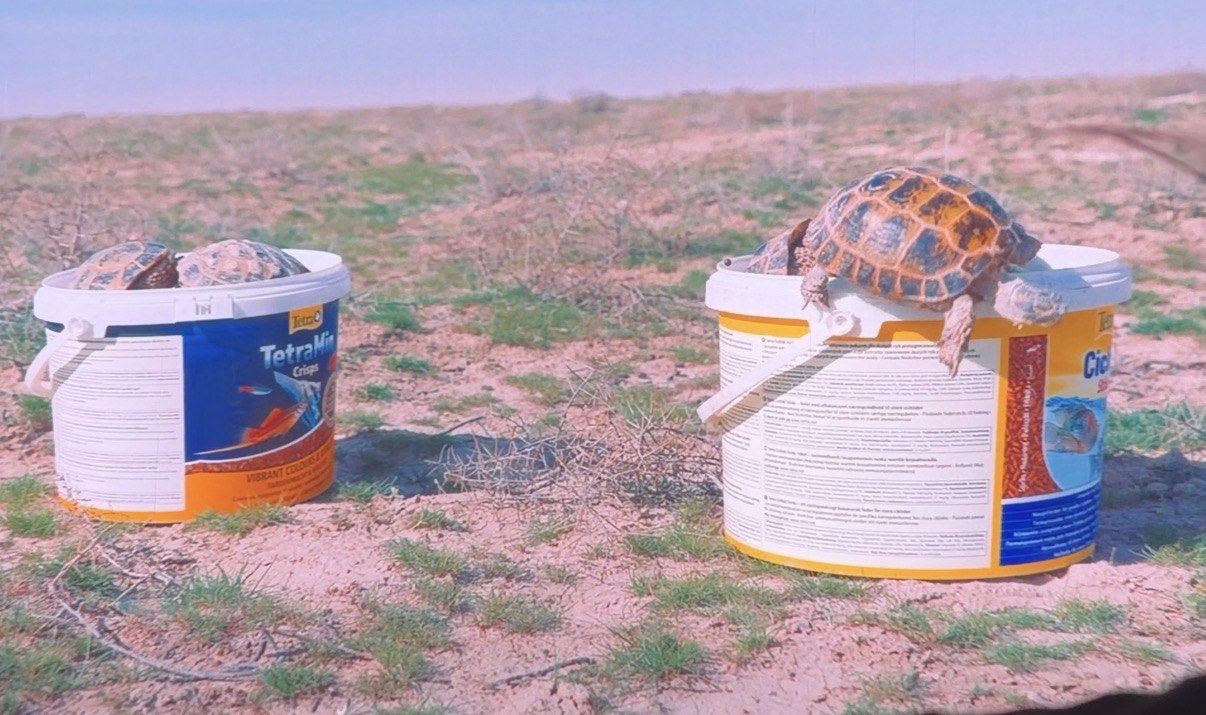
The film tells the story of the TASBAQA Foundation, established by Yulia Zaugg in 2023. The foundation works to conserve the Central Asian tortoise through research on the species, protection of its habitat and environmental education.
One of the foundation’s largest conservation operations took place in spring 2026. In the Turkistan Region, on land leased for ploughing, 9,498 Central Asian tortoises and more than 200 snakes and racerunners were rescued.
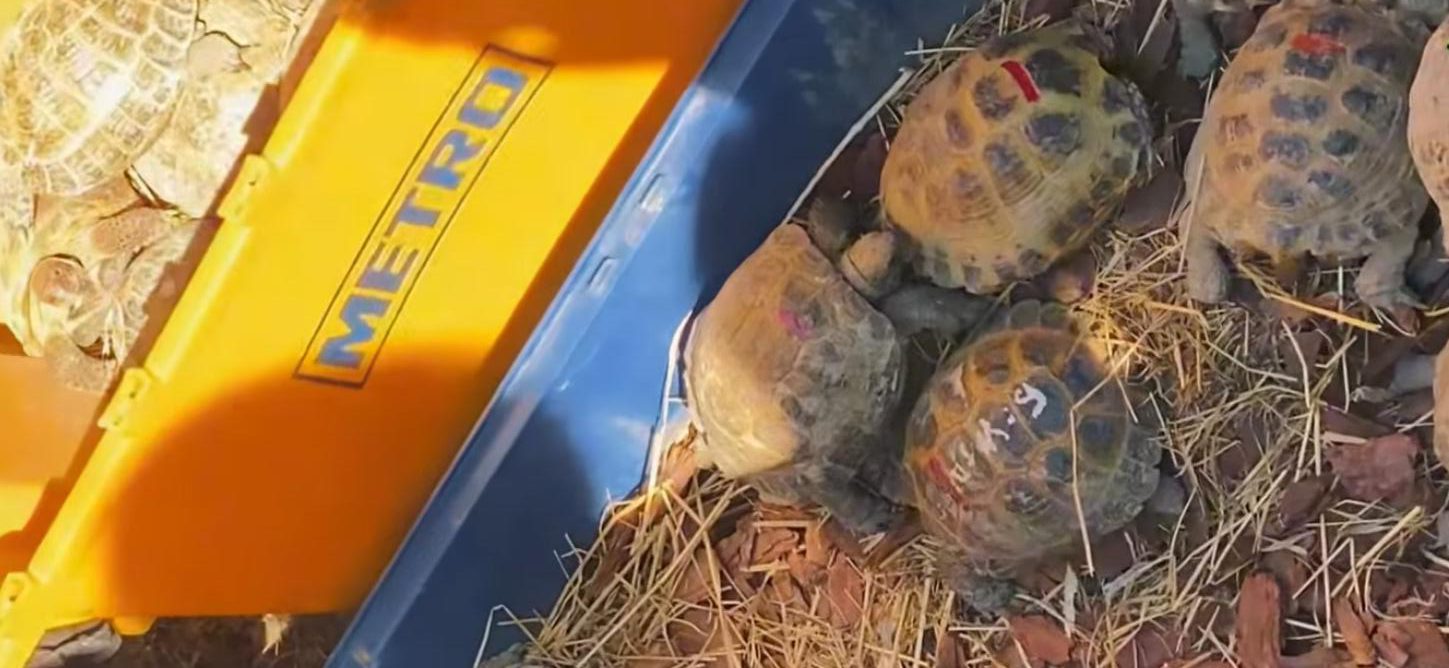
The foundation provides veterinary care and rehabilitation for injured, confiscated and surrendered tortoises, and also eliminates dangerous agricultural trenches in which animals are killed. By 2026, more than 300 km of trenches had been eliminated in three southern regions of Kazakhstan.
These figures reflect a major collaborative effort. The rescue of the animals was made possible through cooperation between the foundation and government agencies, collaboration with Chinese investors, and the support of numerous volunteers and like-minded people.
Science and conservation practice
The conservation of rare and vulnerable species is impossible without scientific knowledge of the status of their populations, distribution, biology and habitat requirements.
For this reason, scientific support from the Institute of Zoology of the Republic of Kazakhstan became an important part of the project. Cooperation with the TASBAQA Foundation makes it possible to combine scientific expertise with practical conservation experience and to raise public awareness of biodiversity conservation issues.
An important area of this work is improving mechanisms for the conservation of the Central Asian tortoise. Since January 2026, based on the scientific justification prepared by the Institute of Zoology, Kazakhstan has introduced a ban on the use of the Central Asian tortoise, its parts and derivatives until 2040 (Order No. 351 of the Minister of Ecology and Natural Resources of the Republic of Kazakhstan dated December 18, 2025). Such measures are particularly important for conserving natural populations and require continuous scientific support and monitoring.
The story of the Central Asian tortoise is also a reminder of how closely scientific research, nature conservation and environmental education are interconnected. Scientific data help us understand ongoing changes, conservation projects allow this knowledge to be applied in practice, and documentary films and other media formats make environmental issues accessible to a broad audience.
Why it is important to talk about tortoises
Tortoises belong to one of the oldest groups of living vertebrates. Their evolutionary history spans more than 200 million years, and their ability to survive major environmental changes makes them a remarkable example of the long history of life on Earth.
However, the evolutionary antiquity of a species does not in itself guarantee its survival in the modern world. Today, the main challenge is the rapid transformation of natural environments under human influence.
Conservation of the Central Asian tortoise requires an integrated approach: studying population status, preserving habitats, regulating economic activities, ensuring compliance with environmental legislation and promoting environmental education.
This is why the release of the film “SAVE THE TORTOISE” is significant not only as a cultural or media event. It is an opportunity to tell a broad audience about a particular species, its way of life and the threats it faces, while also highlighting the people who work every day to conserve Kazakhstan’s wildlife.
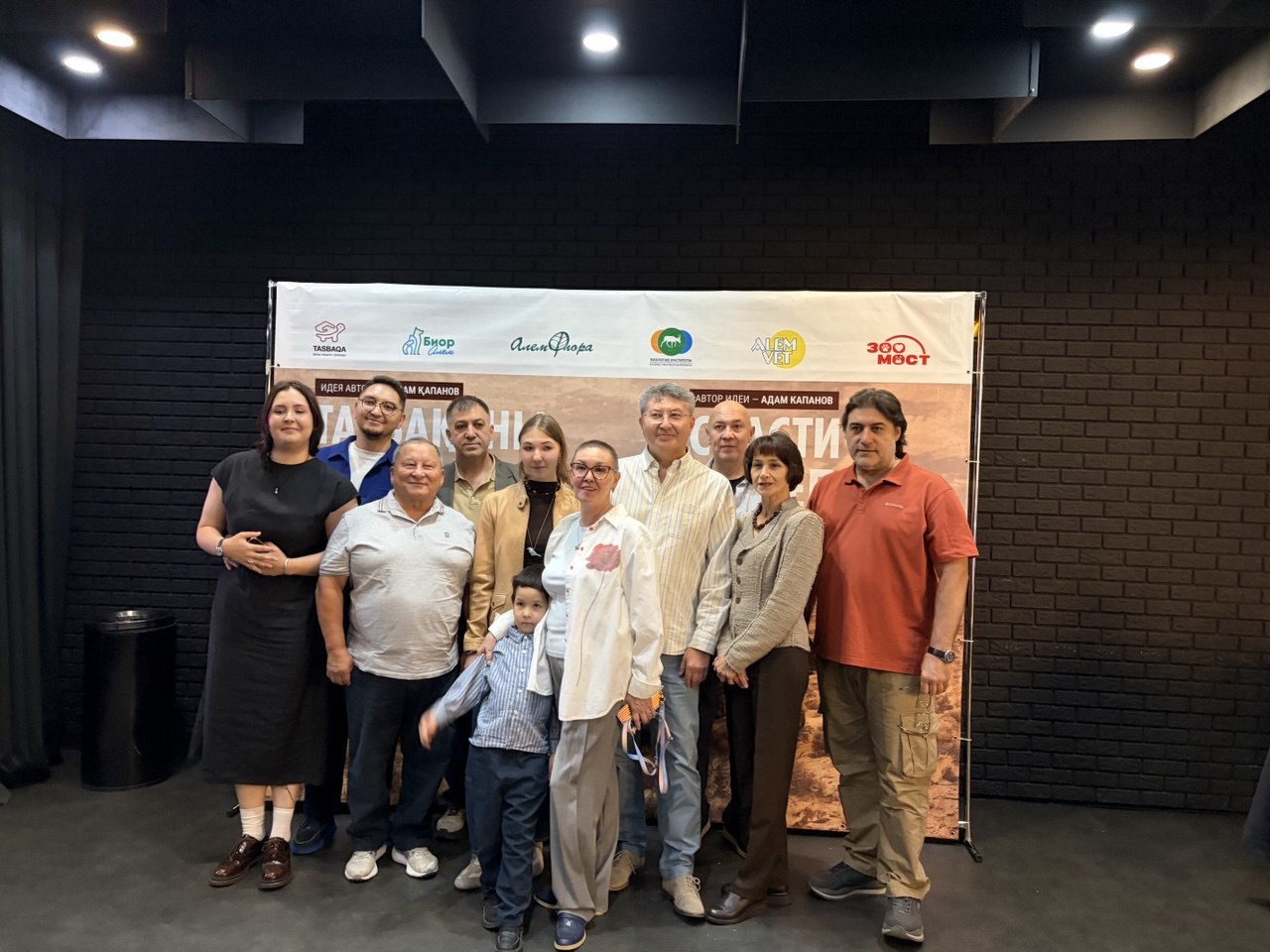
The Institute of Zoology of the Republic of Kazakhstan thanks the filmmakers for drawing attention to the conservation of the Central Asian tortoise, and the TASBAQA Foundation team, led by Yulia Zaugg, for their practical contribution to rescuing animals, protecting their habitats and promoting environmental education.
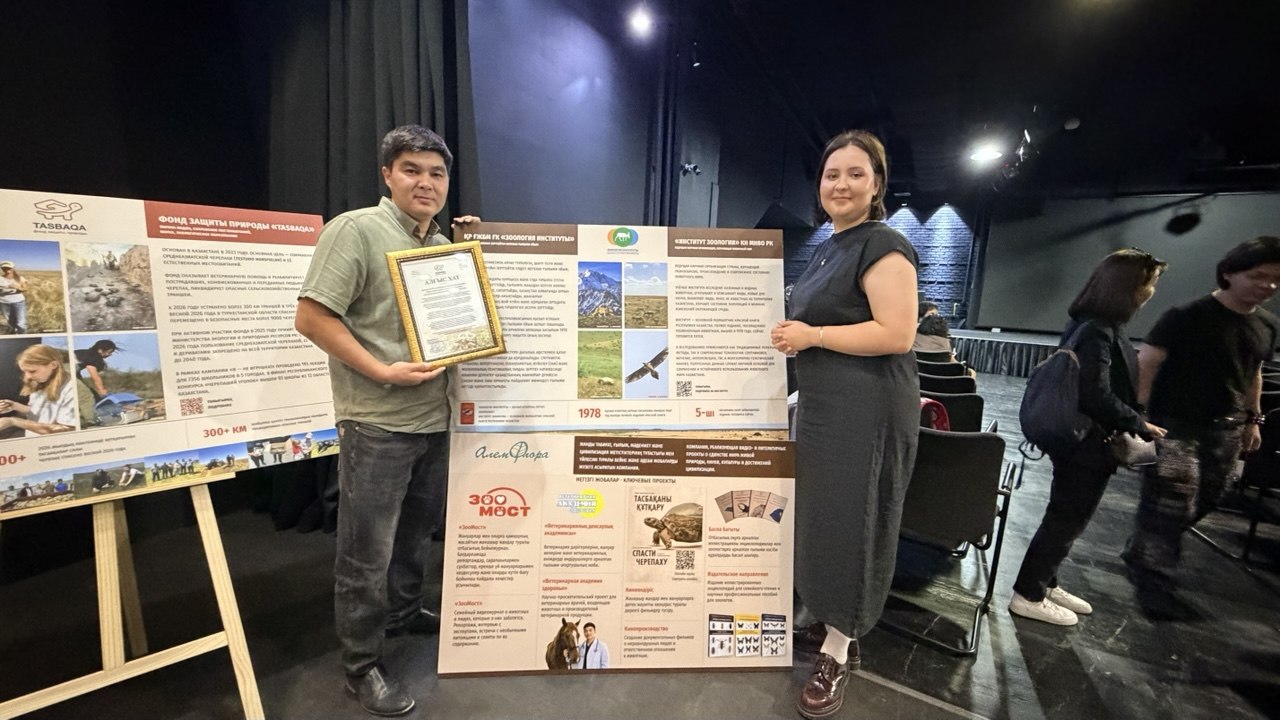
Cooperation between the Institute of Zoology of the Republic of Kazakhstan and the “ZooMost” media project will continue. Their joint work will focus on further coverage of scientific research, conservation initiatives and current issues in the conservation of Kazakhstan’s biodiversity using modern media formats.
About the film’s partners
AlemVet is a leader in the wholesale distribution of veterinary medicines in Kazakhstan, with a 27-year history. The company is an official distributor of MSD Animal Health, Beaphar and several other international manufacturers, and specializes in commercial livestock production.
BiorAlem is a subsidiary of AlemVet focused on companion animal health. It accounts for approximately 70% of wholesale sales of veterinary vaccines and medicines.
Both companies work every day to support animal health in Kazakhstan, from companion animals to commercial livestock. Their support for the film “SAVE THE TORTOISE” was a continuation of their social initiatives.
The Institute of Zoology of the Committee of Science of the Ministry of Science and Higher Education of the Republic of Kazakhstan served as the scientific consultant for the film. It is the country’s leading scientific organization studying the diversity, origin and current state of the animal world. Institute researchers study terrestrial and aquatic animals, discover and describe species new to science, identify species not previously known from Kazakhstan, study population status and assess the effects of environmental change. The Institute is the principal developer of the Red Data Book of the Republic of Kazakhstan. The first edition devoted to vertebrates was published in 1978, and the fifth edition is currently being prepared for publication.
ZooMost is a media project about animals and the people around them.

26.09.2026
Photos: Institute of Zoology of the Republic of Kazakhstan and Yulia Zaugg
Permission from the Institute of Zoology must be obtained before reproducing these materials in any publication. A hyperlink to the website of the Institute of Zoology of the Committee of Science of the Ministry of Science and Higher Education of the Republic of Kazakhstan is required. All rights are protected by the Law of the Republic of Kazakhstan “On Copyright and Related Rights”.